Austria deploys 1.63 GW of solar in 2025
Austria’s photovoltaic market slowed in 2025, with around 1,634 MW of new capacity installed, bringing the country’s total PV capacity to approximately 9.9 GW.
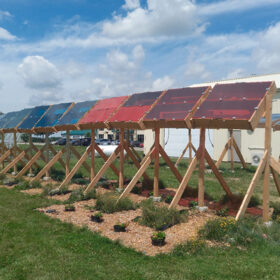
Agrivoltaics for turnips
Researchers in Canada found that semi-transparent cadmium telluride and low-transparency crystalline silicon solar panels can boost turnip root and leaf yields in agrivoltaic systems by optimizing light quality, distribution, and heat stress. Their study highlights that PV module type, transparency, and spectral transmission must be carefully matched to plant physiology to maximize both crop productivity and renewable energy generation.
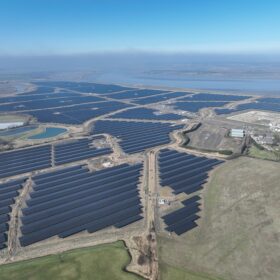
UK solar deployment hits 22 GW as more large projects commissioned
Government data reveals 2.5 GW of new solar added in 12-months period, the fastest pace for a decade. Deployment expected to accelerate as pipeline of utility-scale projects grows and subsidy support for residential installations kicks in.
Spain enables 50-plus renewable plants for real-time voltage control
Spain’s grid operator Red Eléctrica and regulator CNMC have launched real-time voltage control services, allowing renewable energy installations to provide dynamic grid support under a new regulatory framework.

Saudi Arabia adds around 7.8 GW of solar in 2025
Saudi Arabia had a record year for solar deployment last year, taking cumulative capacity past 12.4 GW. GlobalData is forecasting annual deployments to increase in the coming years but notes that they remain behind the pace required to meet the country’s target of 130 GW of renewables by 2030, instead nearing the goal by 2035.

Slovakia deploys 243 MW of solar in 2025
Slovakia’s total solar additions last year fall in line with those seen the prior two years, with cumulative capacity now standing in excess of 1.3 GW.

Solar cyber threats expand, but inverters still stay in the crosshairs
In an interview with pv magazine, Jay Johnson, the CTO of US-based cybersecurity firm DERSec, explains that PV systems face cybersecurity risks that extend far beyond inverters, as demonstrated by a December attack on Polish solar plants where wiper malware targeted substation equipment rather than the inverters themselves. Vulnerabilities often lie in backhaul communication channels like APIs and mobile apps, making layered defenses, network segmentation, and vigilant monitoring essential to safeguard distributed energy resources.
German startup offers team of 22 specialized AI workers for PV plant O&M operations
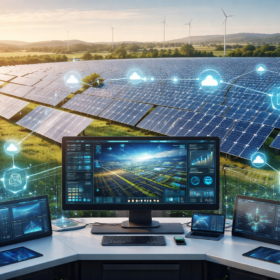
Invertix has launched 22 specialized AI “workers” to automate O&M tasks for renewable energy assets, targeting inefficiencies in data handling, alarm management, and reporting. The startup says its system enables PV plant operators to scale portfolios more efficiently by reducing manual workloads, while keeping humans in the loop for critical decisions.

Türkiye’s solar capacity surpasses 25 GW
Alparslan Bayraktar, Türkiye’s Minister of Energy and Natural Resources, says 2026 will be a record year for renewables in the country after total deployed solar reached 25,827 MW by the end of January.
When tiny magnets attack PV systems
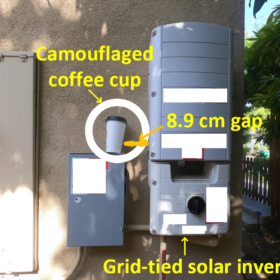
In an interview with pv magazine, cybersecurity expert Mohammad Al Faruque explains how seemingly simple sensors in PV systems and other energy systems are surprisingly vulnerable to magnetic, electrical, and acoustic perturbations, which can remotely influence control systems without physical access. Protecting these sensors requires both strict physical security and the development of hardened, interference-resistant technology to safeguard critical infrastructure.
