
Germany adds 17.5 GW of solar in 2025
Germany installed about 17.5 GW of new PV capacity in 2025, taking cumulative installations past 117 GW by year end, according to preliminary data from the German Solar Association.
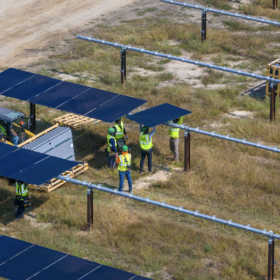
US state repurposes wastewater land for 250 MW solar plant
Consumers Energy has switched on a 250 MW solar project in western Michigan built on an active municipal wastewater treatment site, using a dedicated 138 kV grid connection.

France, Germany, Italy break solar records in December
AleaSoft Energy Forecasting’s latest analysis finds Germany broke its record for solar production on a day in December on Christmas Day, reaching 87 GWh, while Italy and France achieved the same feat three days later, registering 66 GWh and 54 GWh respectively.

Researchers propose new taxonomy for agrivoltaics
A Malaysian research team proposed new concepts such as cowvoltaics, sheepvoltaics, goatvoltaics, veggievoltaics, fruitvoltaics and fishvoltaics to better define the diverse applications of photovoltaics in dual land use. Their review outlines four main categories – livestockvoltaics, crop-based agrivoltaics, aquavoltaics, and zoovoltaics – and presents several business cases.
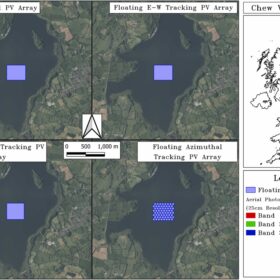
UK study finds azimuthal trackers boost floating PV performance
A University of Exeter team has tested single-axis tracking systems for floating solar across 12 UK sites, finding azimuthal tracking delivers the largest energy gains and lowest levelized cost of energy (LCOE).
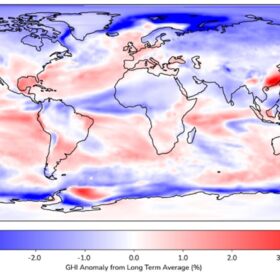
Early Solar forecast: First half 2026 solar outlook
In a new weekly update for pv magazine, Solcast, a DNV company, reports that early 2026 will bring mixed solar conditions globally, with strong prospects in eastern Australia and eastern China, but cloudier-than-normal outlooks for much of Europe, Asia, and parts of the US early in the year.
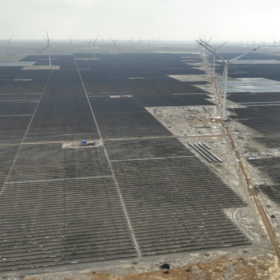
Adani Green Energy commissions 307.4 MW of renewables in India
Adani Green Energy Ltd. (AGEL) has commissionied an aggregate 307.4 MW of renewable energy capacity at Khavda in Gujarat, India.
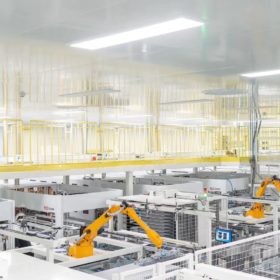
China solar manufacturer Eging faces potential exit from flagship PV project
A regional government authority in eastern China is weighing whether to unwind a multibillion-yuan manufacturing joint venture with Eging PV after construction delays and funding disruptions, underscoring mounting strain across the country’s solar supply chain.
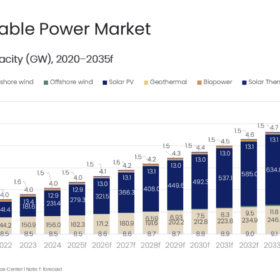
US market on course to hit 737.8 GW of solar by 2035
GlobalData’s latest analysis says the U.S. will add between 41 GW and 52 GW of solar annually until 2035.

New digital twin for floating PV application uses artificial intelligence
Scientists have developed a floating PV digital twin system, trained on data from 155 physical experiments, using a two-tier artificial neural network (ANN) with a high-fidelity model and a reduced-order model. Predictive performance reached R2 values of 0.9996 for PV surface temperature and 0.9189 for power output.
