
Is solar really the root cause of Spain’s massive power outage?
Some media outlets have speculated that Spain’s April 28 blackout may have been caused by a disconnected solar plant, but DNV grid analyst Andrea Mansoldo tells pv magazine that it was likely due to a combination of grid weakness and low-frequency oscillations.
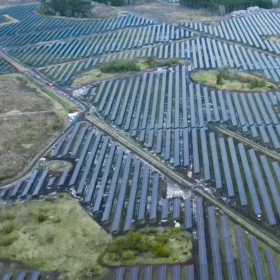
Alight inaugurates Sweden’s largest solar park
Swedish independent power producer Alight has completed a 64 MW solar project near Stockholm. The site in in Hallstavik is now the largest PV facility in the country.
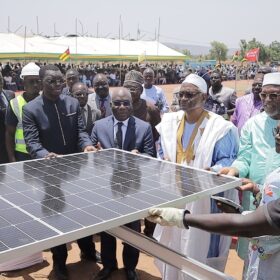
Togo breaks ground on solar-plus-storage project
Togo has begun construction on a 25 MW solar plant with 36 MWh of battery storage in the country’s north. China’s TBEA International Engineering is leading the project, which is scheduled for completion within 13 months.

Colombia approaches 2 GW solar capacity milestone
Colombia is approaching 2 GW of cumulative installed PV capacity, with 1.34 GW currently operational and an additional 700 MW in testing, according to the country’s grid operator.
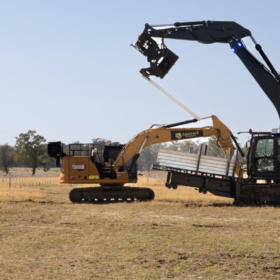
AI-driven robotic piling tech supports 250 MW solar project in Australia
Bouygues Construction Australia (BCA) is trialing an autonomous piling system (APS) to build Engie’s 250 MW Goorambat East Solar Farm (GESF) in Victoria, Australia.

Takamiya launches vertical mounting solution for agrivoltaics, areas with little space
The Japanese company said its new vertical mounting system is ideal for farmland, regions with heavy snowfall, along factory fences, and in parking areas.

US solar cell production could double in less than two years
US solar cell production is set to double in under two years, driven by growth in domestic content. Anza shares second-quarter 2025 insights into the solar supply chain amid uncertainty.

Spain’s nationwide blackout leaves millions in the dark, cause still unclear
Spanish energy expert Antonio Delgado Rigal tells pv magazine that while the exact cause of yesterday’s nationwide blackout in Spain remains unclear, preliminary signs point to grid instability triggered by system failure.
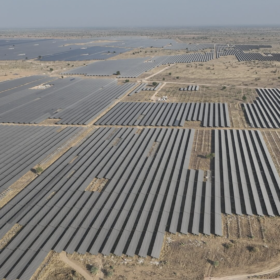
India installs 7.8 GW of solar in Q1
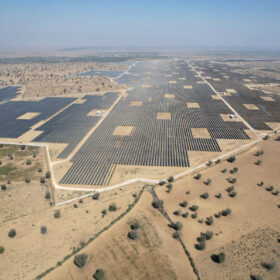
India installed 7.8 GW of solar capacity in the first quarter of 2025, marking its second-highest quarterly total in the past 13 quarters, according to the Institute for Energy Economics and Financial Analysis (IEEFA).
Amazon buying big on solar
For the past five consecutive years, tech and retail giant Amazon has been the world’s largest procurer of renewable energy, investing in projects and signing power purchase agreements (PPAs) all over the world. pv magazine spoke with representatives of the company about its ambitious energy plans.
