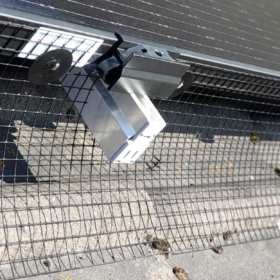
Sassmann develops ‘solar panel grid’ for pigeon protection
Sassmann, a Germany-based company, has developed a modular “solar panel grid” system designed to prevent pigeons from nesting beneath photovoltaic modules.
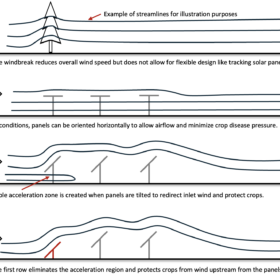
Tracker-based agrivoltaics turn fields into wind-safe zones
Cornell University researchers demonstrated that tracking solar panels in agrivoltaic systems can protect crops from wind damage while allowing airflow, outperforming traditional single-row tree windbreaks. They also proposed a new lowered-first-row panel design that improves wind protection, achieving up to 86% reduction in shelter-zone wind speeds under extreme conditions.
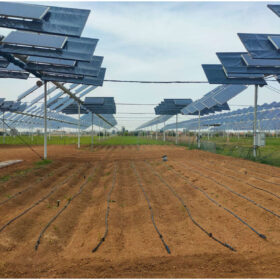
Multi-year field study finds that agrivoltaics can support healthy potato yields
Multi-year field trials conducted in Italy show that agrivoltaic systems can support healthy potato yields without major losses. Strategic shading and dynamic light management during critical growth stages proved key to maintaining productivity.
SMA Solar Technology confirms wider loss for 2025 on weak PV market
SMA Solar Technology AG says revenue declined slightly and losses widened significantly in 2025 due to weak demand and one-off effects from its restructuring program.

German startup offers team of 22 specialized AI workers for PV plant O&M operations
Invertix has launched 22 specialized AI “workers” to automate O&M tasks for renewable energy assets, targeting inefficiencies in data handling, alarm management, and reporting. The startup says its system enables PV plant operators to scale portfolios more efficiently by reducing manual workloads, while keeping humans in the loop for critical decisions.
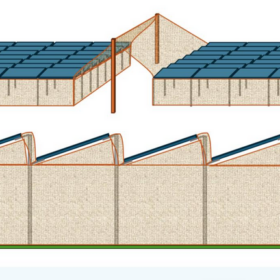
The case for ground-level agrivoltaics
German engineering firm BEC Energie Consult has developed a substructure for low-mounted agrivoltaics designed to provide cost-efficient installation while supporting crop growth and livestock management, with the potential to enhance economic viability.
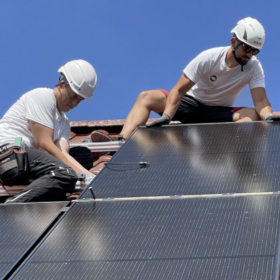
Iran conflict stirs solar demand debate in Germany
Germany’s solar sector is reporting a surge in inquiries following the military escalation between Israel, the United States, and Iran, with E.ON citing a doubling of demand for solar installations. Other industry participants are more cautious, attributing much of the increase to seasonal patterns rather than geopolitical anxiety.
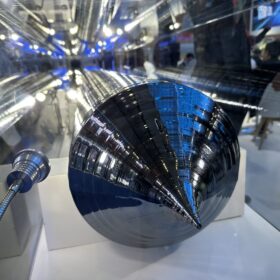
India extends solar manufacturing mandate to wafers and ingots
India’s Ministry of New and Renewable Energy (MNRE) has expanded its Approved List of Models and Manufacturers (ALMM) framework to include solar ingots and wafers, with mandatory compliance for new project bids taking effect from June 1, 2028.
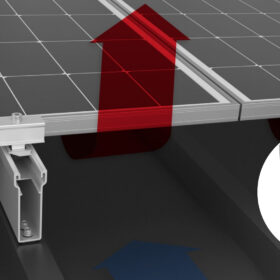
K2 Systems unveils elevated PV mounting solution for metal roofs
The K2 MultiRail High mounting system is a one-piece elevated solution with a height of 100 mm tailored to improve rear ventilation on metal roofs. K2 Systems says greater distance between modules and metal roof surface improves airflow and lowers module temperature, which can translate to higher annual energy yield.
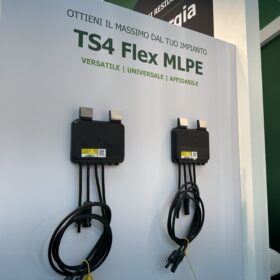
Tigo debuts 725 W optimizer for high-power solar modules
The new product has a maximum wattage of 725 W, a maximum current of 22 A, and a maximum efficiency of 99.6%.
