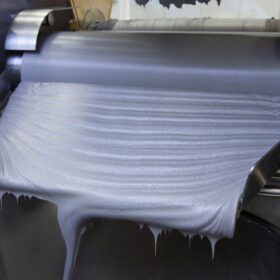
Silver demand from PV industry expected to drop 19% this year
A new report from Metal Focus reveals that global silver market remains structurally tight, with elevated prices, a fifth consecutive annual supply deficit in 2025, and ongoing mine and recycling constraints despite modest production growth. At the same time, PV-driven silver demand is falling sharply due to cost pressure and thrifting.
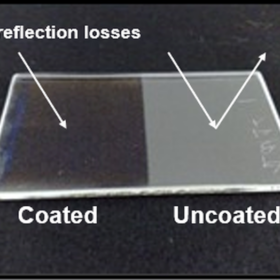
Porous silica-based anti-reflective coating increases PV glass optical transmission by 5.2%
Researchers in Spain developed a porous silica anti-reflective coating for solar panels that boosts optical transmission while balancing durability and mechanical stability through optimized sol–gel chemistry.

Cyber threats for PV: What are credential compromise attacks and how do they work
Credential compromise attacks allow adversaries to gain unauthorized access to PV systems by stealing or guessing valid login credentials, enabling them to manipulate operations, disrupt monitoring, or take control of critical assets. These attacks can lead to operational instability, reduced energy production, and safety risks, making strong authentication and access control essential for system resilience.
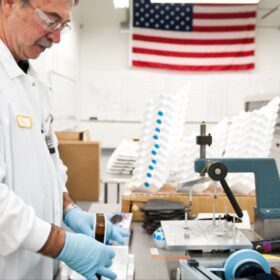
Suniva to build 4.5 GW solar cell factory in South Carolina
The expansion will bring the company’s total domestic cell capacity to 5.5 GW, cementing its position as the largest merchant solar cell manufacturer in the United States.
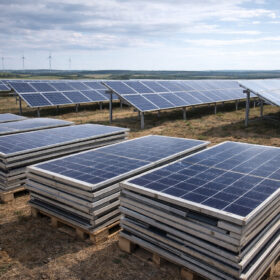
How to generate hydrogen at home with recycled solar panels
Scientists in Chile have developed a low-cost, easy-to-deploy hydrogen system powered by end-of-life solar panels. The residential solution reportedly achieves a levelized cost of hydrogen of approximately $5.8/kg.

Atmoce debuts microinverter connecting two solar modules
Atmoce’s new MI microinverter series connects two PV modules per unit while still providing module-level power optimization.

India adds heterojunction cell tech to approved solar manufacturers list
Reliance Industries Ltd has become the first company to secure the inclusion of heterojunction solar cells in the Approved List of Models and Manufacturers (ALMM) published by India’s Ministry of New and Renewable Energy.
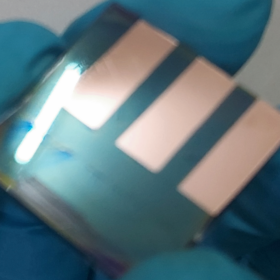
Reduced graphene oxide boosts stability in perovskite solar modules
Indian scientists have fabricated perovskite mini-modules with reduced graphene oxide interface engineering, achieving 16.6% efficiency and over 1,300 hours of stable operation. The graphene oxide layer improves film quality, reduces defects, enhances charge transport, and enables scalable fabrication, offering a promising route toward efficient and durable perovskite solar modules.
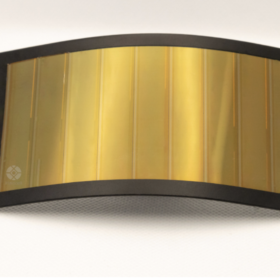
Halocell Energy, Sofab Inks advance perovskite collaboration
An ongoing collaboration between Australia’s Halocell Energy and U.S-based Sofab Inks finds that perovskite modules incorporating Sofab’s Tinfab electron transport layer maintain approximately 100% of their normalized efficiency after 1,300 hours under accelerated combined light and damp-heat testing.

Dismantled 28-year-old PV system reveals wasps nest in junction box
Researchers in Austria discovered a wasp nest inside the junction box of a 1998 rooftop PV module, illustrating how insects can exploit even sealed electrical components. The affected module showed significant degradation and partial failure, though overall results confirmed the surprising durability of older PV module designs.
