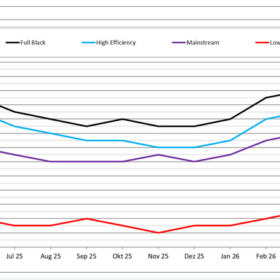
PV module prices continue to rise unabated
Photovoltaic module prices have risen for the fourth consecutive month, driven by strong demand for energy independence despite falling upstream costs such as polysilicon. At the same time, production cuts in China and tighter supply conditions are limiting availability, reinforcing price increases across all technologies.

Philippines registers solar module maker targeting EU export market
The Philippine Economic Zone Authority (PEZA) has formally registered Genuine Renewable Energy and Eco-Friendly Energy Network Corp. (GREEENC) as an ecozone enterprise to manufacture and export PV modules, with the European Union as the primary target market.
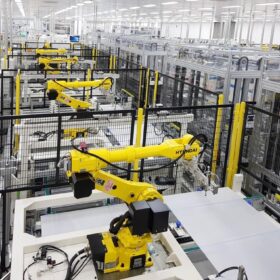
South Korea widens tax credits for low-carbon solar manufacturing
South Korea has extended investment tax credits to solar module manufacturing facilities meeting carbon footprint thresholds, in the latest step in a policy trajectory that increasingly uses procurement and tax measures to support domestic manufacturers.

OCI in talks with SpaceX for polysilicon supply
Media outlets in South Korea are reporting that Malaysia’s OCI TerraSus, a subsidiary of Seoul-headquartered chemicals company OCI Holdings, is in talks with SpaceX for a multi-year polysilicon supply contract.

Silver demand from PV industry expected to drop 19% this year
A new report from Metal Focus reveals that global silver market remains structurally tight, with elevated prices, a fifth consecutive annual supply deficit in 2025, and ongoing mine and recycling constraints despite modest production growth. At the same time, PV-driven silver demand is falling sharply due to cost pressure and thrifting.
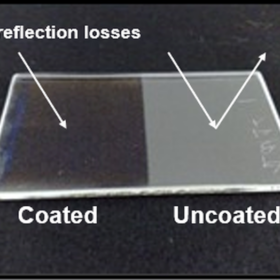
Porous silica-based anti-reflective coating increases PV glass optical transmission by 5.2%
Researchers in Spain developed a porous silica anti-reflective coating for solar panels that boosts optical transmission while balancing durability and mechanical stability through optimized sol–gel chemistry.

Cyber threats for PV: What are credential compromise attacks and how do they work
Credential compromise attacks allow adversaries to gain unauthorized access to PV systems by stealing or guessing valid login credentials, enabling them to manipulate operations, disrupt monitoring, or take control of critical assets. These attacks can lead to operational instability, reduced energy production, and safety risks, making strong authentication and access control essential for system resilience.
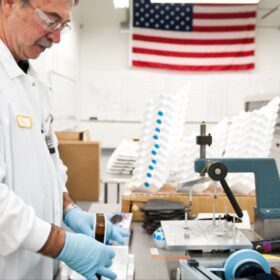
Suniva to build 4.5 GW solar cell factory in South Carolina
The expansion will bring the company’s total domestic cell capacity to 5.5 GW, cementing its position as the largest merchant solar cell manufacturer in the United States.
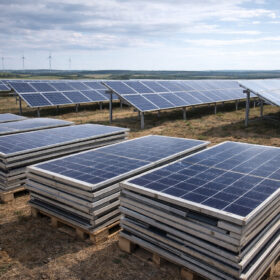
How to generate hydrogen at home with recycled solar panels
Scientists in Chile have developed a low-cost, easy-to-deploy hydrogen system powered by end-of-life solar panels. The residential solution reportedly achieves a levelized cost of hydrogen of approximately $5.8/kg.
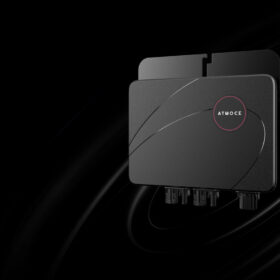
Atmoce debuts microinverter connecting two solar modules
Atmoce’s new MI microinverter series connects two PV modules per unit while still providing module-level power optimization.
