
New deep learning tech uses electroluminescence images to identify defective PV cells
The novel method uses the YOLOv8 framework, integrating an attention mechanism and a transformer model. It was tested on a dataset of 4,500 electroluminescence images against several other models and its results were up to 17.2% more accurate.

Drone-based electroluminescence services for rooftop PV
Solevi, a German electroluminescence (EL) inspection company, has launched drone-based electrical inspection services for rooftop solar installation in Germany with plans to automate further and expand geographically.

Hygroscopic hydrogel may increase solar module yield by 2.1%
Researchers in China have found that a special type of hygroscopic hydrogel made of the polyacrylamide polymer and lithium chloride may reduce PV module temperature by up to 7.5%. They have also developed a mathematical model to analyze the operational mechanisms and factors responsible for the cooling performance.

U.S. increases and extends clean energy import tariffs on China
The U.S. Trade Representative decided that it will expand tariffs on solar components, batteries, semiconductors, steel, and EVs from China.

Addressing ESG in an ultra-low-cost environment
Shifting requirements for supply chain traceability and carbon footprint disclosure, along with solar oversupply and unsustainably low module prices, have made 2024 a challenging year for PV manufacturers. Despite these obstacles, the industry remains committed to its crucial role in the global energy transition. pv magazine recently spoke with Haimeng Zhang, chief strategy and environmental, social, and corporate governance (ESG) officer at Longi Green Energy, about how the sector is preparing to meet these challenges.

Chinese PV Industry Brief: Aiko Solar, GoodWe, Ginlong Solis post H1 profit declines
Aiko Solar, GoodWe, and Ginlong Solis have all posted declines in net profit for the first half of 2024 due to industry overcapacity.
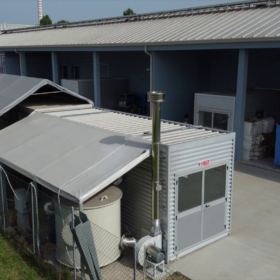
Italian startup develops thermo-mechanical PV panel recycling process
Venice-based 9-tech has developed a thermomechanical process to recycle end-of-life PV panels, with early results showing an 87% recovery yield of materials such as silicon, copper, and silver.

Chinese solar module prices fall despite price hikes in upstream segment
In a new weekly update for pv magazine, OPIS, a Dow Jones company, provides a quick look at the main price trends in the global PV industry.

POLO back junction solar cell built with PECVD achieves 24.2% efficiency
A group including scientists from Insititute for Solar Energy Research Hamelin (ISFH) and German PV equipment manufacturer Centrotherm has developed a POLO back junction solar cell by using an industrial plasma enhanced chemical vapor deposition (PECVD) system with a low-frequency plasma source. The device achieved a slightly higher efficiency than a reference device fabricated via more expensive atomic layer deposition (ALD).
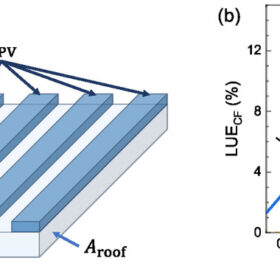
Freeware tool predicts light transmission, power generation of PV materials used in agrivoltaics
A research paper from scientists at Swansea University describes their tool for analyzing thermodynamic limits of organic semiconductor-based photovoltaics (OPVs). One of the findings was that semi-transparent solar PV deployed in greenhouses may deliver comparable performance to conventional crystalline silicon PV.
