Carbon-based perovskite solar cell relying on phosphorene achieves 15.58% efficiency
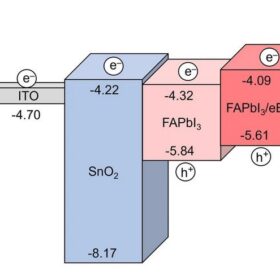
The result is the best efficiency ever recorded for a carbon-based PV cell using unconventional hole transporting materials to date. The device was built with a hole transparent layer based on electrochemically produced large-area phosphorene flakes, which reportedly enable the required band energy alignment within the cell.
Solar panel import tariffs increase US module prices by up to 286%
Clean Energy Associates released a summary of the seven solar module trade policies and solar panel import tariffs currently in place, including AD/CVD rulings, Section 201/302, and the Uyghur Protection Act. These tariffs have significantly increased, or will increase, the cost of hardware imports into the United states – predominantly from China, but not exclusively – by 91% to 286%
Chinese PV Industry Brief: Longi to issue $1.38 billion of bonds
Longi says it will issue up to CNY 10 billion ($1.38 billion) of bonds. It will primarily use the funds to support operational needs, supplement working capital, repay interest-bearing debts, and aid project construction and operations.
Spanish startup offers pre-assembled vertical rooftop PV systems equipped with reflectors
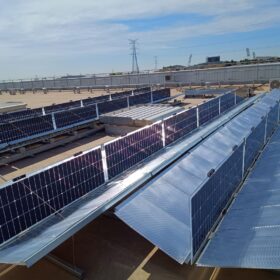
FutureVoltaics says it has developed pre-assembled, reflector-based vertical rooftop PV systems. The systems feature 175 W heterojunction bifacial solar modules and special reflectors on both sides.

Mondragon Assembly supplies agrivoltaics production line in Greece
Mondragon Assembly says it is supplying Greece’s first manufacturing line for agrivoltaics. The production line has a capacity of 150 MW, with plans to upgrade to 300 MW, and is tailored for semi-transparent solar modules.
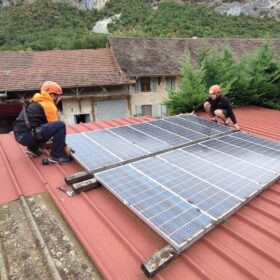
Solar modules deployed in France in 1992 still provide 79.5% of original output power
New testing conducted at France’s oldest PV system have shown that its solar modules can still provide performance values in line with what the manufacturers promised.
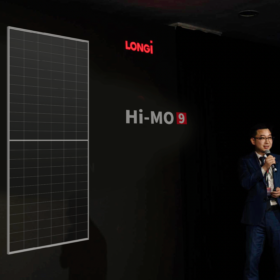
Longi presents 24.4%-efficient 660 W HPBC solar panel
Intended for applications in utility scale PV projects, the new Hi-MO 9 module is available in eight versions with power output ranging from 625 W to 660 W and power conversion efficiency spanning from 23.1% to 24.4%.

ISC Konstanz claims 24.12% certified efficiency for tunnel back contact solar cell
The result was confirmed by Germany’s Institute for Solar Energy Research Hamelin (ISFH). The cell also achieved an open-circuit voltage of 709.5 mV, a short circuit density of 11,355 mA, and a fill factor of 82.04%.
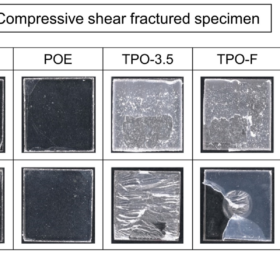
New research identifies advantages of thermoplastic polyolefin encapsulants in dual-glass solar modules
Austrian researchers performed tests on thermoplastic polyolefin (TPO) encapsulant as an alternative to conventional ethylene vinyl acetate (EVA) copolymer and polyolefin elastomers (POE) to assess its use in glass-glass modules. They report that all of the TPO specimens outperformed EVA and POE, especially TPO-3.5 encasulants.

Carbon electrode-based perovskite solar cell achieves 20.8% efficiency via new lamination tech
A research team in Australia has used a lamination technique known as cold isostatic pressing (CIP) to build a perovksite solar cell based on a flexible bilayer electrode made of carbon and silver that can reportedly compete with gold-carbon eletrode based counterparts in terms of efficiency and stability.
