Germany has urgent need to expand solar module recycling capacities, IEA-PVPS says
Feedback from stakeholders involved in Germany’s end-of-life PV modules treatment chain found more needs to be done around the transparency of PV module waste volume, the take-back and collection process and module recycling, as the country prepares for significantly larger volumes by the end of the decade.
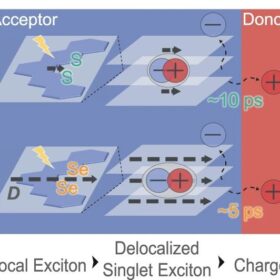
Non-fullerene organic solar cell with selenium acceptor achieves 19% efficiency
Researchers in China have designed an organic solar cell the uses an acceptor based on selenium as an alternative to commonly utilized non-fullerene acceptors. The new acceptor enabled the cell to have reduced non-radiative recombination loss and improved dielectric constant.
FuturaSun releases 580 W TOPCon solar panels with 22.4% efficiency
The Italian PV manufacturer said its FU570-580M Silk Nova panel features half-cut and multi-busbar technology. The new product has a temperature coefficient of -0.29/C and a power output ranging from 570 W to 580 W.
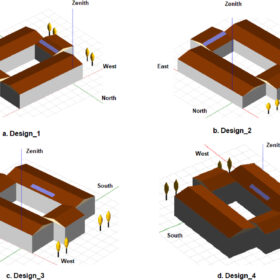
Improving performance ratio of PV systems via shading effect
Researchers in Indonesia have investigated how shading effects may influence the performance ratio of a PV system. Their analysis also considered payback period and return on investment.

Chinese PV Industry Brief: JinkoSolar breaks ground on 56 GW solar factory
JinkoSolar has broken ground on a 56 GW PV panel factory in China’s Shanxi province. It says the new facility will be vertically integrated and will be constructed in four 14 GW phases.

Luminous opens solar panel factory in India
Luminous has opened a new solar panel factory in India. The fully automated plant has a current production capacity of 250 MW, expandable up to 1 GW of nameplate capacity.
US solar industry calls for domestic content rules to support manufacturing
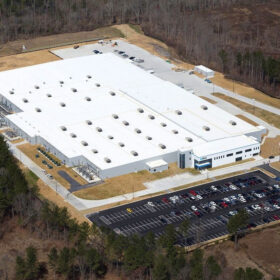
A recent report from the Solar Energy Manufacturers for America Coalition (SEMA) shows that with stronger support in the early stages, US module manufacturers would rely less on imports from Chinese-owned companies for materials.
New design for organic/CIGS tandem solar cells promises 27.46% efficiency
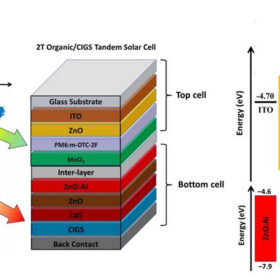
Scientists in the Middle East designed a flexible two-terminal organic/CIGS tandem solar cell for wearable applications. The device achieved an open-circuit voltage of 1.89 V, a short-circuit current density of 17.55 mA/cm2, and a fill factor of 82.79%.
Tracker sensors for agrivoltaics
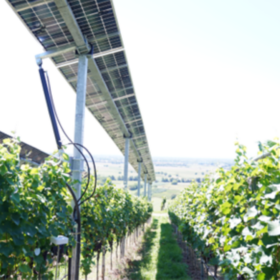
Sensors from German electronics manufacturer SICK are used in solar PV tracking systems since 2021. Now they are making their way into agrivoltaic applications.
Vast majority of German farmers ready to embrace agrivoltaics
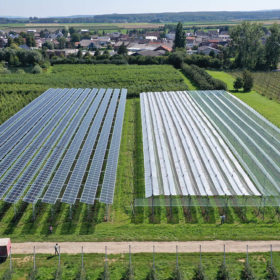
A new survey conducted by Germany’s Fraunhofer ISE showed that 72.4% of the country’s farmers are considering the deployment of an agrivoltaic project. Among the main factors behind this choice, the researchers identified the additional source of income coming from solar power generation and the perceived usefulness of the technology.
