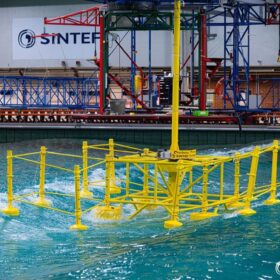
Norwegian startup testing hybrid solar, wave, wind system
Norway’s Flex2Future has begun testing a scaled-down model of its offshore energy system in collaboration with research firm SINTEF. The startup’s CEO says the system, integrating solar, wave and wind energy, can deliver power at a relatively low cost per kWh.
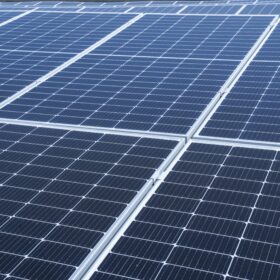
PV module recycling technologies ‘progressing’, says IEA-PVPS
Latest report from the International Energy Agency’s (IEA) Photovoltaic Power Systems Programme (PVPS) finds measurable advancements in PV module recycling performance compared to its prior studies, including higher material recovery rates, improved process yields and higher output purity.
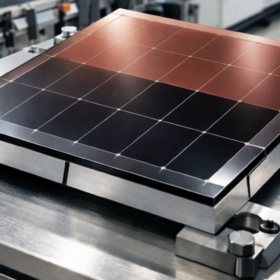
Fraunhofer ISE opens perovskite-silicon tandem scale-up lab
Fraunhofer Institute for Solar Energy Systems ISE has opened a dedicated lab in Freiburg, Germany, to scale perovskite-silicon tandem cell designs to large wafer formats using industry-standard processes.
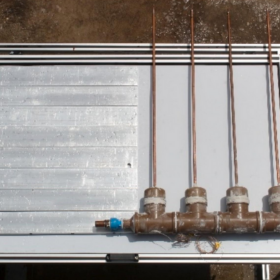
How to retrofit commercial PV panels into photovoltaic-thermal modules
Researchers in Brazil found that retrofitting commercial PV panels into PVT systems can boost total efficiency to around 46–50%, but added thermal resistance limits heat extraction and slightly reduces electrical performance. Their experiments showed performance is capped by interface quality and system design, requiring improved heat extraction capacity.

Solar panels reduce thermal stress in dairy barns during critical afternoon hours
A study from China shows rooftop PV systems on dairy barns can significantly reduce roof heat flux and improve indoor thermal conditions. Field measurements and simulations found up to a 2.3 C reduction in indoor temperature during peak afternoon heat stress periods.

Arctech debuts TOPCon photovoltaic pavement solution
Harmony-F solar flooring can withstand uniformly distributed loads of at least 2 tons and has a hardness above 7 on the Mohs scale, indicating high resistance to wear and abrasion.

Solex Energy plans 5 GW solar cell factory in India
The Indian manufacturer is investing around $420 million to expand its manufacturing footprint alongside efforts to advance high-efficiency PV technologies through its partnership with ISC Konstanz.
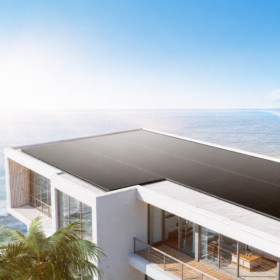
Trina launches rooftop solar module with lower-voltage design
The Chinese manufacturer has launched an “Australia specific” variant of its Vertex S+ modules featuring a power output of 515 W and a maximum efficiency of 24.65%. Its lower-voltage design reportedly enables more flexible string sizing, allowing installers to optimize system layouts across a range of inverter configurations.
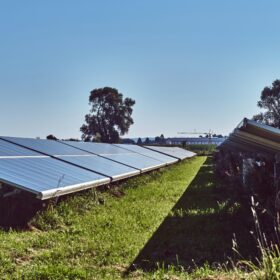
EU solar and storage push could cut power system costs by nearly half
A scenario analysis by SolarPower Europe, modeled by Rystad Energy, finds that accelerating PV and battery storage deployment could save the European Union €223 billion ($260.7 billion) in gas imports between 2026 and 2030 and reduce wholesale electricity prices by 14% compared with 2025 levels.
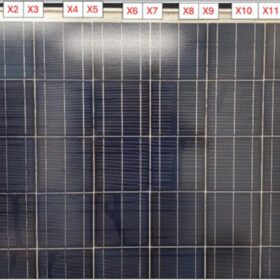
New technique measures water ingress in PV modules without disconnecting them
A German research team has developed a nondestructive, on-site method to quantify water ingress in photovoltaic modules using near-infrared absorption (NIRA) spectroscopy calibrated with Karl–Fischer titration (KFT). The approach enables precise measurement of absolute moisture content in sealed modules without disassembly, improving inspection, failure analysis, and lifetime prediction.
