
Alfa Solar and Astronergy plan solar cell, wafer venture in Turkey
Astronergy Europe says its new venture with Alfa Solar will build an integrated cell and wafer plant with 2.5 GW of initial capacity in Turkey.

Reducing PV module temperature with twisted tape
Researchers in Iran have investigated how twisted tape in water-cooled channels can enhance heat transfer in solar modules. They have used a computer simulation to analyze the new approach with different parameters and have found the panels’ ectrical efficiency increased by up to 11.84%.
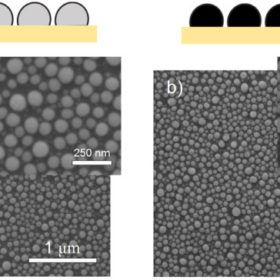
Nanostructured antireflective coating for gallium arsenide solar cells
A Spanish research team demonstrated a broadband antireflective coating for gallium arsenide solar cells. Based on thermally oxidized gallium nanoparticles, the nanostructured coating reduced reflectance by 30% across the solar spectrum, and increased solar cell performance by 10%.

Chinese PV Industry Brief: DKEM files patent lawsuit against silver paste rival
Wuxi DK Electronic Materials (DKEM) has filed a patent lawsuit against Zhejiang Guangda Electronic Technology over alleged infringement of its conductive silver-paste patents.

S-5! launches new clamp for solar carports
The US mounting system provider said its new product is designed to fit both Cee and Zee purlin-framed structures. It features a bottom-oriented setscrew.

Spain allocates €2 billion to expand clean energy and industry programs
Spain’s Ministry for Ecological Transition says a new €2 billion ($2.3 billion) funding package is designed to accelerate industrial capacity, expand renewable deployment, and boost the country’s long-term energy resilience.
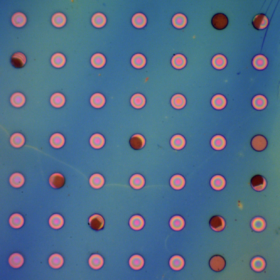
MIT researchers develop polymer film that could prevent solar panel corrosion
Engineers at the Massachusetts Institute of Technology say their polymer coating could be used to protect photovoltaic modules, due to its impermeability to gases. The team has demonstrated that a 60-nanometer-thick film can extend the lifetime of a perovskite crystal by several weeks.

Fraunhofer ISE builds first perovskite-silicon tandem solar cell with copper metallization
Using the mask-and-plate copper metallization technique, scientists at the German research center fabricated a 1.21 cm² perovskite–silicon tandem solar cell featuring a heterojunction bottom device. The cell achieved an efficiency of 19.35%, reportedly the highest value reached to date for this cell type using galvanic front metallization.

OPIS Global Polysilicon Marker inches higher as US Section 232 uncertainty lingers
In a new weekly update for pv magazine, OPIS, a Dow Jones company, provides a quick look at the main price trends in the global PV industry.

Colombia sets up state solar panel maker with Swedish state support
Colombia’s Ministry of Mines and Energy says it has created a state-owned solar panel manufacturer with Swedish government backing to supply domestic renewable programs and strengthen local manufacturing.
