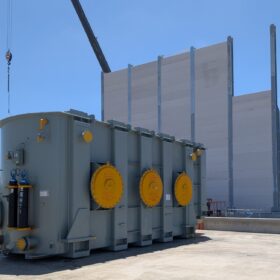
Why BESS insurers are sweating transformers and contractor errors over battery fires
The BESS insurance risk profile is shifting. In an exclusive interview, Tokio Marine GX underwriter Michael Carrington explains why insurers are looking past battery fires and sweating over supply chain bottlenecks, high-voltage transformers, and costly EPC integration errors.

The Hydrogen Stream: Ionautics advances catalyst toward production
Sweden’s Ionautics has advanced its platinum-based hydrogen catalyst toward full-scale industrial production, while thyssenkrupp nucera has signed contracts for 300 MW of alkaline electrolysis capacity in Spain and 260 MW in India.
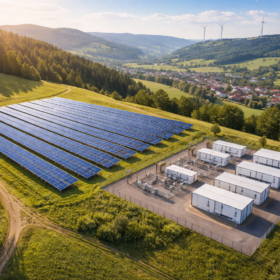
Why technical due diligence is becoming the backbone of Europe’s solar-storage boom
Europe’s hybrid solar-plus-storage projects are growing rapidly, but increasing complexity means treating technical due diligence as a formality is now a serious risk. Rigorous, lifecycle-based technical due diligence (TDD) – covering financial, supply chain, digital, and ESG factors – is essential to ensure project reliability, investor confidence, and a resilient clean-energy transition.
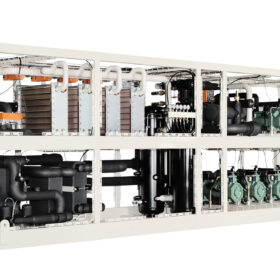
Advansor unveils scalable CO2 heat pump for large-scale heating needs
The Danish company said its configurable CO2 system delivers up to 4.8 MW per unit and is scalable to 50 MW for large industrial and commercial projects. The units offer hot water output of up to 95 C and compatibility with complex installations such as food processing, district heating, and commercial buildings.
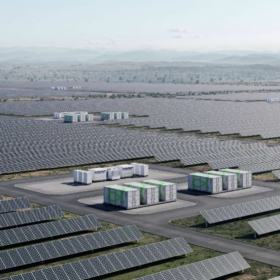
Edify Energy awards EPC contracts for 1.8 GW of solar and storage in Australia
Edify Energy will start construction proper of two massive solar and battery energy storage projects in Queensland, Australia, by mid-year after naming DT Infrastructure as its preferred engineering, procurement and construction (EPC) contractor.
Solar and the cyber winter
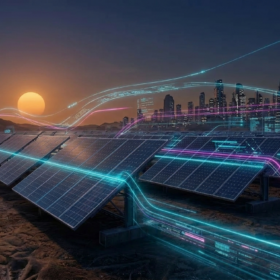
In an interview with pv magazine, cybersecurity expert Roberto Setola describes a structural shift in cyber threats against solar energy infrastructure, where attacks now target peripheral systems like remote terminal units rather than centralized SCADA, often in coordinated campaigns amplified by AI. He also emphasized that the recent cyberattack to PV plants in Poland demonstrated how simultaneous strikes on smaller, less-protected operators can potentially trigger major disruptions, including blackouts, economic losses, and cascading grid risks.
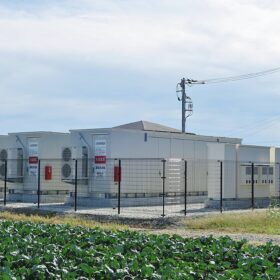
Panasonic claims world’s first trial of cybersecurity monitoring for grid-scale BESS
A Japanese joint-pilot will test grid-scale BESS with a range of local and remote attack vectors, with cybersecurity monitoring to watch for indications of anomalies.
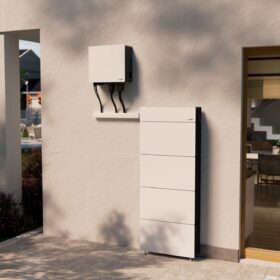
SolarEdge launches Nexis hybrid inverter and high-voltage battery for residential PV
The Nexis solution combines a flexibly configurable hybrid inverter with a modular high-voltage battery offering up to 14 kW charging capacity per stack. The inverter delivers 8–20 kW AC power, supports up to 200% DC oversizing, and features IP65-rated design with integrated backup power.
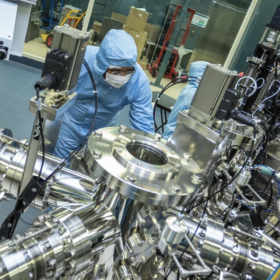
Scientists demonstrate quantum battery prototype with rapid charging
Scientists from Australia’s Commonwealth Scientific and Industrial Research Organisation (CSIRO), RMIT University and the University of Melbourne have developed a quantum battery prototype that demonstrates rapid, scalable energy storage using collective quantum effects.
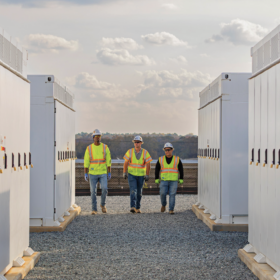
On-site batteries accelerate grid access for data center developers
Battery energy storage systems (BESS) are increasingly used in uninterruptible power supply (UPS) applications for data centers and to speed grid connections, offering services beyond what gas turbines can provide, including emerging approaches such as bring your own capacity (BYOC) and flexible grid connections (FGC).
