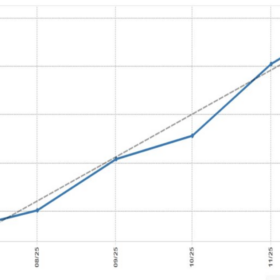
Australia adds 1.2 GWh of behind-the-meter battery storage in December
More than 1.2 GWh of new behind-the-meter energy storage capacity was installed across Australia in December 2025 as households and businesses sought to take advantage of the federal government’s revised AUD 7.2 billion ($4.9 billion) Cheaper Home Batteries Program.
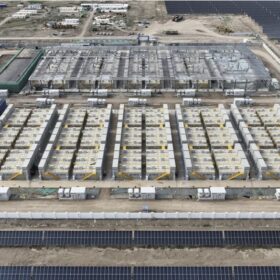
China connects world’s largest vanadium flow battery project
The GWh-scale long-duration energy storage project is expected to reduce curtailment in Xinjiang, a region of China with high solar and wind generation, and transmission bottlenecks. The flow battery installation is co-located with a PV plant.
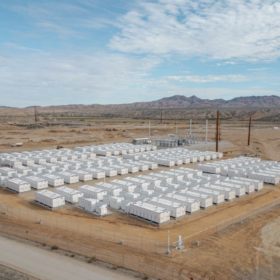
Regulatory changes could shape Brazil’s 2026 battery storage auction
Brazil’s long-awaited capacity reserve auction for battery energy storage is scheduled for April 2026, following a year of rulemaking that expanded the expected supply volume and introduced new legal and regulatory constraints.
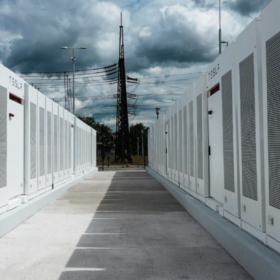
India’s energy storage market set for breakout year in 2026
After a record year for energy storage tenders in 2025, projects awarded since mid-2023 are expected to begin commissioning in 2026, reflecting typical development timelines of 18 to 24 months.
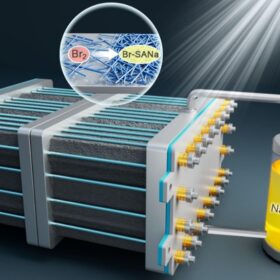
Corrosion-free bromine flow battery promises longer life and higher energy density
A new two-electron bromine chemistry sharply cuts corrosion while boosting performance, opening a clearer path for zinc–bromine flow batteries at grid scale.
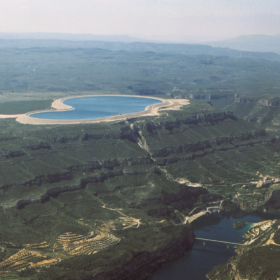
Spain opens €90 million funding round for 7 GWh of pumped hydro storage
Spain will provide €90 million ($105.3 million) in funding for nearly 1 GW of pumped hydro projects, adding 7 GWh of long-duration energy storage (LDES) by 2035. Each project will be eligible for a maximum €50 million grant and all work must be completed by June 30, 2035.
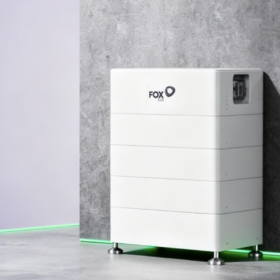
Fox ESS rolls out stackable battery system
Chinese manufacturer Fox ESS has launched a 5.99 kWh capacity modular battery energy storage system that can be scaled up to 83.86 kWh per stack.
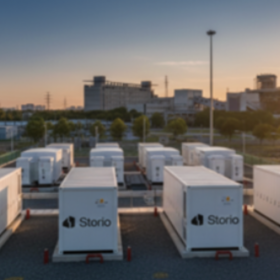
Industrial batteries in France earn revenue through secondary reserve
Storio Energy has enabled behind-the-meter (BTM) industrial battery systems to participate in the automatic Frequency Restoration Reserve (aFRR), a service that has until now been dominated by front-of-the-meter storage in France.

Greece struggling to connect grid-scale battery storage projects
Greece has awarded permits for about 900 MW of standalone, front-of-the-meter battery storage through three auctions, but no projects have yet been connected to the grid.

Scandium doping stabilizes sodium-ion cathodes in new study
A team at Tokyo University of Science (TUS) has identified a structural mechanism by which adding small amounts of scandium to layered sodium manganese oxide cathodes slows the degradation that typically limits sodium-ion battery lifetimes.
