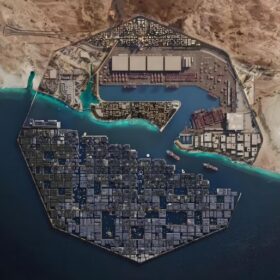
‘Grid-forming technology is no longer experimental – it’s here and working’
In grids increasingly dominated by renewables, grid-forming technology is emerging as critical tool for maintaining stability and ensuring reliable power system operation. In this interview with ESS News, Rui Sun, Sungrow’s Deputy General Manager-Grid Technology Center, explains how grid-forming works, why it matters, and where the technology is already proving its value. He elaborates on technical challenges, regulatory gaps, and why grid-forming could soon become the new industry standard.
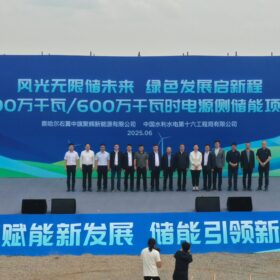
PowerChina breaks ground on world’s largest power generation-side battery storage project
On June 26, the construction of the world’s largest power generation-side energy storage project in Ulan Chab, Inner Mongolia, officially began. This 1 GW/6 GWh project, using lithium iron phosphate (LFP) technology, aims to enhance grid stability and support China’s renewable energy transition.
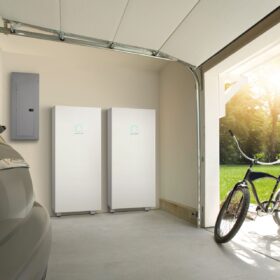
Spain pairs battery storage with 26% of new rooftop PV systems in 2024
Around one-quarter of all new rooftop PV systems installed in Spain in 2024 included battery storage, underscoring continual growth in distributed energy, despite a decline in total installed storage capacity.

World’s largest vanadium flow battery goes online in China
A giant solar-plus-vanadium flow battery project in Xinjiang has completed construction, marking a milestone in China’s pursuit of long-duration, utility-scale energy storage.
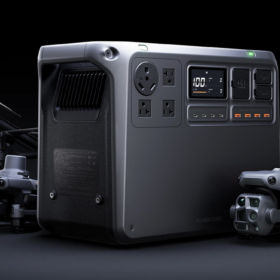
DJI debuts 2 kWh Power 2000 battery
DJI previously offered a Power 1000 battery, released in 2024, but the company’s new Power 2000 model is uniquely compatible with its ecosystem, plus expansion batteries.
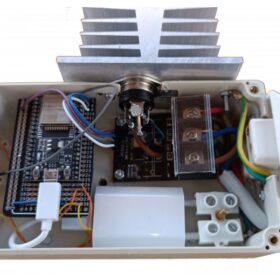
Open-source tools to build self-made management system for surplus PV power
French engineer André Buhart has published the plans and open-source software to create a DIY “solar energy router” to manage PV overproduction. Depending on the configuration, the device can direct excess photovoltaic energy to water heaters, pool motors, or underfloor heating, among others.
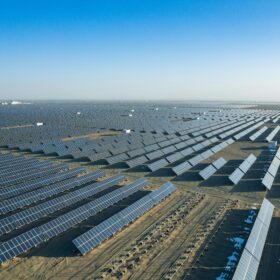
Chinese PV Industry Brief: Trina Solar to supply 700 MW to Austrian utility
Trina Solar has agreed to supply more than 700 MW of high-efficiency PV modules for projects in Spain and Italy under a five-year deal with Verbund Green Power, while EVE Energy says it will invest CNY 8.65 billion ($1.2 billion) in a new battery plant in Kedah, Malaysia.
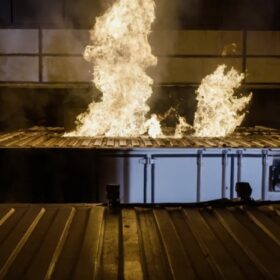
Envision proves BESS fire resilience in CSA-certified test
Envision recently completed a large-scale, CSA C800 witnessed burn test of its 5 MWh energy storage system, demonstrating robust thermal containment and adding to industry-wide safety efforts.
The Hydrogen Stream: EU launches mechanism to match H2 demand, supply
The European Commission has launched the Hydrogen Mechanism to support matching supply and demand under its Energy and Raw Materials Platform, while the US Senate has advanced a budget bill to extend the deadline for 45V hydrogen production tax credits to the end of 2027.

Brazilian energy storage regulation due this year, says regulator
Agência Nacional de Energia Elétrica (ANEEL), Brazil’s electricity regulator, will publish initial energy storage regulations in the second half of 2025, with two additional consultation phases set to conclude by 2028, according to rapporteur Daniel Danna.
