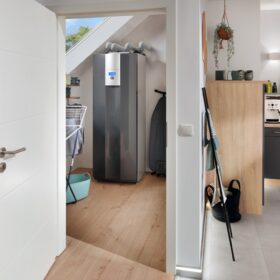
Ait-Group launches residential heat pumps with low propane charge
Germany’s Ait Group has introduced residential ground-source heat pumps using less than 150 grams of propane, based on results from the Fraunhofer ISE LC150 research project. The new systems deliver up to 6 kW of heating with a seasonal coefficient of performance of 5.14.

CATL, Sungrow and CRRC Zhuzhou lead Chinese energy storage rankings
The China Energy Storage Alliance (CNESA) has released its 2024 rankings of Chinese energy storage companies, with CATL, Sungrow, and CRRC Zhuzhou Institute securing top positions across key segments.
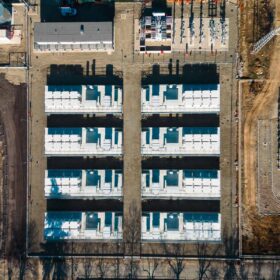
Ukraine’s largest battery storage project enters commissioning phase
Ukraine’s 200 MW/400 MWh battery project dwarfs most Eastern European installations, and is expected to come online in October 2025, ahead of the winter.

Pakistan’s largest battery storage project nears operation for cement firm
Lucky Cement’s 22.7 MWh battery is the largest in Pakistan, and the project is now just months away, according to a company executive.

Superdielectrics unveils Faraday 2 battery as a polymer-based alternative to Li-ion
Superdielectrics launches the Faraday 2 battery, advancing a water-based, metal-free approach to home storage, from a UK-based facility.

The Hydrogen Stream: eCap Marine to supply fuel cells for marine vessels
eCap Marine says it will supply 8 MW of hydrogen fuel cell systems for four zero-emission vessels under construction for Norway’s Møre Sjø and logistics firm Samskip, with deliveries expected in 2027.
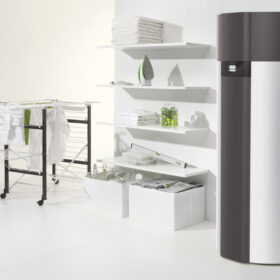
Panasonic launches new domestic hot water heat pump
The Aquarea DHW Heat Pump utilizes propane as the refrigerant and is reportedly able to reach maximum temperatures of 65 C. The standalone unit supports PV contact and is compatible with external recirculation pumps.

CATL lawsuit threatens Hithium IPO
China’s Contemporary Amperex Technology Co. Ltd. (CATL), the world’s largest battery manufacturer, has filed a lawsuit accusing fast-growing rival Hithium of unfair competition – a move that could jeopardize Hithium’s upcoming initial public offering (IPO) in Hong Kong.
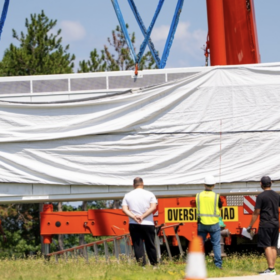
Tesla deploys 9.6 GWh in Q2, Nevada cell plant nears completion
Tesla deployed 9.6 GWh of battery storage in the second quarter of 2025, with year-to-date volumes up nearly 50% from 2024. The company recorded flat quarterly growth and says its 10 GWh Nevada cell factory is close to completion.

‘Grid-forming technology is no longer experimental – it’s here and working’
In grids increasingly dominated by renewables, grid-forming technology is emerging as critical tool for maintaining stability and ensuring reliable power system operation. In this interview with ESS News, Rui Sun, Sungrow’s Deputy General Manager-Grid Technology Center, explains how grid-forming works, why it matters, and where the technology is already proving its value. He elaborates on technical challenges, regulatory gaps, and why grid-forming could soon become the new industry standard.
