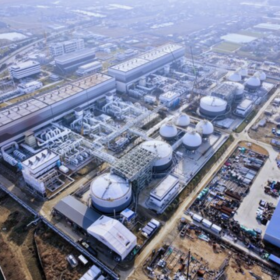
China’s 600 MW/2.4 GWh storage plant becomes world’s largest CAES site
With 600 MW of installed capacity and 2,400 MWh of storage, the Huai’an Salt Cavern project is now the world’s largest compressed air energy storage (CAES) facility, surpassing the 300 MW/1,500 MWh project commissioned earlier this year that previously held the title.
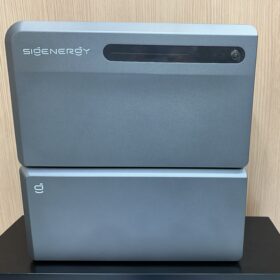
Sigenergy unveils 2.68 kWh battery for balcony PV
Sigenergy has launched a 2.68 kWh balcony storage system with four MPPTs and up to 4 kW of PV input. The scalable LFP solution offers 800 W grid output, 1.2 kW backup power, and expansion up to 18 kWh per tower.
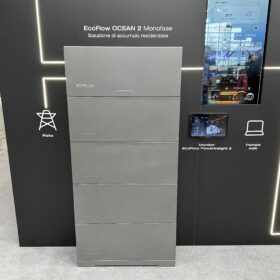
Ecoflow debuts 5 kWh residential inverter battery with 100% depth of discharge
EcoFlow has unveiled the single-phase Ocean 2 all-in-one battery inverter at Key Energy in Rimini. The system features a more compact 5 kWh LFP battery stackable up to 30 kWh and offering 100% depth of discharge, 3.4 kW discharge power, and IP66 protection.

Argentina tenders 700 MW of battery storage nationwide
Argentina’s Energy Secretariat has opened a national and international tender for battery energy storage systems (BESS) at grid-constrained nodes outside the Buenos Aires metropolitan area, targeting about $700 million in investment.
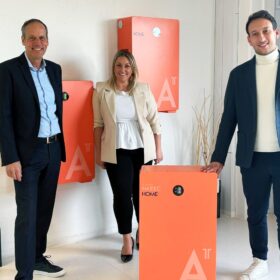
Austria’s Accupower launches residential sodium-ion battery
The Natec Home has a nominal capacity of 7.68 kWh and a power output of 3.8 kW, and allows parallel connection of up to 15 units. The reference price is set at €3,990.
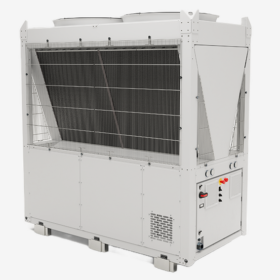
Daikin launches new propane heat pumps for commercial, industrial applications
Daikin has introduced two new propane heat pump lines for industrial and district heating applications, combining monobloc units from 20 kW to 85 kW with modular systems scalable up to 2 MW.
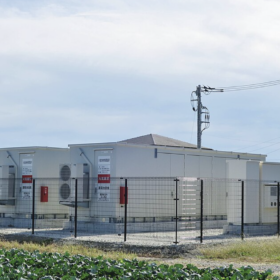
US energy storage shatters records with 58 GWh installed in 2025
The Solar Energy Industries Association (SEIA) and Benchmark Mineral Intelligence say US battery installations reached a record 57.6 GWh in 2025, up 30% year on year, as the industry enters what they describe as a new phase of sustained, high-volume deployment.
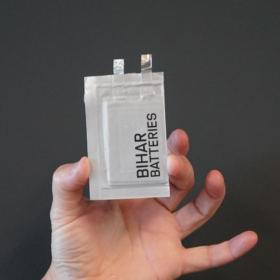
All European sodium-ion battery manufacturers at a glance
The European Economic and Social Committee (EESC) will place sodium batteries at the center of its work on the EU’s industrial strategy and is calling for swift action. pv magazine has compiled a list of manufacturers developing this technology in Europe.
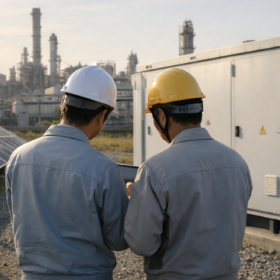
Osaki Electric signs EMS development pact with Kyocera, Taiwan Plastics
Osaki Electric says it has signed an agreement to formalize joint development of its AI-based energy management system (EMS), integrating solar generation and lithium iron phosphate (LFP) battery storage. It aims to sign a final contract by December 2026.
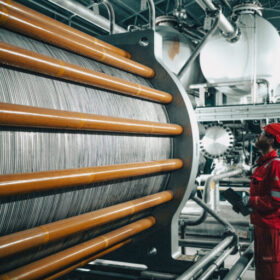
The Hydrogen Stream: ACES 220 MW Utah project nears completion
HydrogenPro says its 220 MW ACES Delta project in Utah is nearing completion, with all electrolyzers operating at full load, while the hub will store hydrogen in salt caverns with energy capacity two to three times that of all US grid-connected batteries combined.
