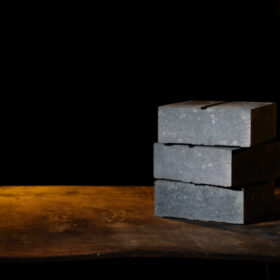
Australian startup builds production line for thermal energy storage blocks
Australia-based MGA Thermal has secured AUD 8.25 million ($5.39 million) from domestic and international investors as it gears up for commercial-scale production of its thermal long-duration energy storage solution.
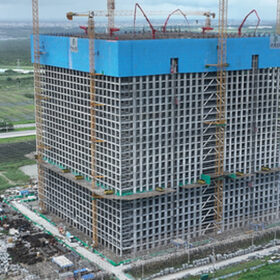
Energy Vault completes 25 MW/100 MWh gravity-based storage facility in China
Energy Vault has started commissioning a 25 MW/100 MWh energy storage facility adjacent to a wind power facility near Shanghai.
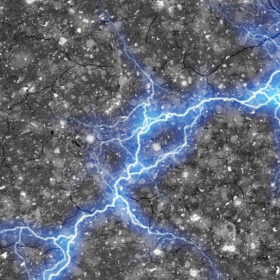
Carbon-cement supercapacitors for bulk energy storage
The Massachusetts Institute of Technology (MIT) has developed a scalable bulk energy storage solution with inexpensive, abundant precursors – cement, water, and carbon black. Their supercapacitors have high storage capacity, high-rate charge-discharge capabilities, and structural strength.
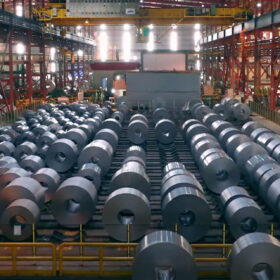
JSW Steel to use green hydrogen to make steel in India
JSW Energy says it plans to set up a green hydrogen plant with an annual capacity of 3,800 tons to supply steel to JSW Steel, driven by 25 MW of renewable energy.
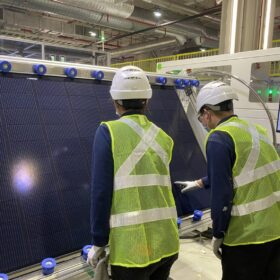
Brookfield, Reliance aim to kick off new era in Australian solar manufacturing
Brookfield’s bold ambitions for Australia have reached a new level, with the global asset manager signing an agreement with India-based Reliance Industries to explore the production of solar panels, long-duration battery storage, and other renewable energy equipment.
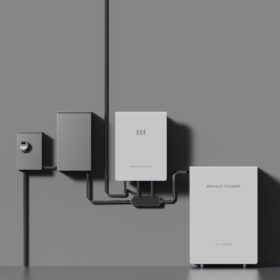
Mango Power introduces 12 kW / 15 kWh whole home battery
The Mango Power M includes a hybrid inverter with 18 kW solar input and can be paired with an electric vehicle charger.
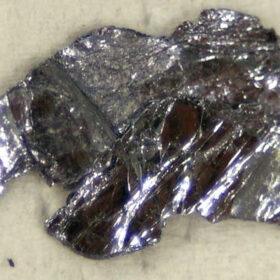
The Hydrogen Stream: Chinese scientists exploring new catalysts for hydrogen
Shanghai University scientists have started researching molybdenum-doped nickel-cobalt phosphide catalysts for hydrogen production, and Indian scientists have devised a method to produce hydrogen from methanol.
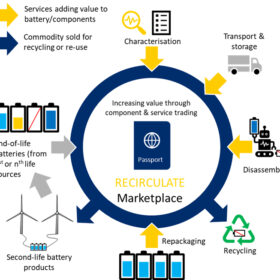
Recirculate – giving EV batteries a second-life
With the rapid growth in electric vehicle (EV) demand bringing fears of a mountain of EV battery waste piling up further down the line, the EU-Swiss government-funded Recirculate program is planning how to keep batteries in use for much longer before they head to recyclers.
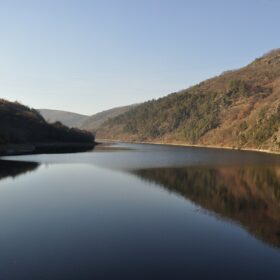
Romania resumes development of 1 GW pumped hydropower project
Romania is resuming the development of the Tarniţa Lăpuşteşti pumped hydro storage project, with a planned capacity of 500 MW to 1 GW. It will be the first installation of its kind in the country.
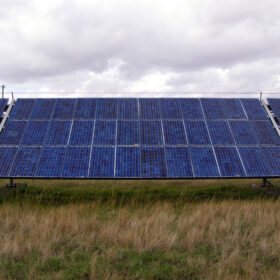
Pexapark notes demand for renewables-plus-storage assets in Europe
Pexapark, a Swiss consultancy, has studied energy storage drivers, value streams, contractual agreements, and regional perspectives in Europe. It says that one obstacle to deployment is the inability to properly model revenue, and notes that 15% of companies plan to use AC coupling for projects in the next three years.
