
‘Motherhood further shaped my leadership perspective’
This week Women in Solar+ Europe gives voice to Margarita Licht, Product Manager BESS & Charging at Germany’s Goldbeck Solar. She says diverse perspectives and cognitive styles are essential in the solar and energy storage sector, enabling smarter solutions, effective problem-solving, and long-term planning. She also emphasizes that creating inclusive environments, fostering allyship, and choosing workplaces that value authentic strengths empower growth and drive meaningful impact.
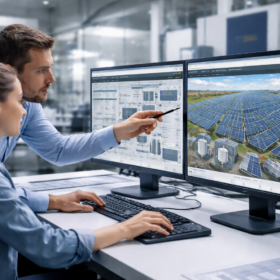
New intrusion detection systems boost protection of SCADA systems against cyber threats
An international reserch team developed two deep learning-based IDS models to enhance cybersecurity in SCADA systems. The hybrid approach reportedly improves detection of complex and novel cyber threats with high accuracy, adaptability, and efficiency, outperforming traditional methods across multiple datasets.

BBDF 2026: Finance, tolling, and getting the merchant balance right
As Europe prepares to roll out 200 GWh of battery storage over the next five years, discussion at the Battery Business & Development Forum 2026 turns to how financing models are rapidly shifting. Bankers, developers and stakeholders shared key pain points with the audience, as well as practical advice.
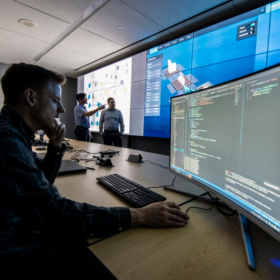
U.S. national laboratories lead multi-agency push for solar cybersecurity standards
The U.S. Department of Energy is deploying a research framework across four national laboratories to harden the domestic power grid against digital vulnerabilities as solar deployment accelerates.
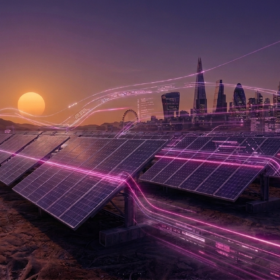
UK defining stronger energy cybersecurity rules after Poland attack
The UK government is proposing stronger cybersecurity rules for electricity and gas sectors, prompted by recent attacks on European energy infrastructure, including a recent incident involving solar power plants in Poland. The plans would extend baseline cybersecurity requirements to all licensed energy organizations and could also adjust compliance thresholds under NIS regulations.

‘Be kind to yourself and patient with your journey’
This week Women in Solar+ Europe gives voice to Irene Mihai, Policy Director at the Romanian Photovoltaic Industry Association (RPIA). She says her personal experiences show how mentorship, collaboration, and inclusive workplace practices are essential for attracting and retaining talent while empowering the next generation to contribute to a sustainable future.
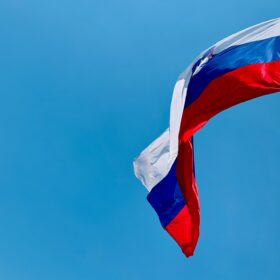
European prosecutor investigates suspected solar tender fraud in Slovenia
The European Public Prosecutor’s Office is investigating an unnamed solar company after it breached conditions of a public tender for the co-financing of small solar plants. The office says house searches were carried out this week by Slovenian police, leading to the seizure of documents, electronic data and devices.

US ITC opens Section 337 probe into global TOPCon supply chain
The US International Trade Commission (ITC) has opened a Section 337 investigation into tunnel oxide passivated contact (TOPCon) solar cells, modules, panels, and related products following a complaint by First Solar, naming 47 entities across 11 countries as respondents.
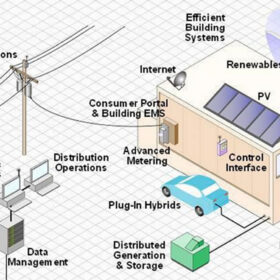
Industry 4.0 technologies raise cyber risks for smart renewables grids
An international research team developed a multi-stage intrusion detection system that uses supervised and unsupervised AI techniques to detect and mitigate cyber threats in smart renewable energy grids. The system can reportedly achieve high accuracy, low false positives, and real-time detection, outperforming traditional intrusion detection system models.

Solar cyber threats expand, but inverters still stay in the crosshairs
In an interview with pv magazine, Jay Johnson, the CTO of US-based cybersecurity firm DERSec, explains that PV systems face cybersecurity risks that extend far beyond inverters, as demonstrated by a December attack on Polish solar plants where wiper malware targeted substation equipment rather than the inverters themselves. Vulnerabilities often lie in backhaul communication channels like APIs and mobile apps, making layered defenses, network segmentation, and vigilant monitoring essential to safeguard distributed energy resources.
