
Envision unveils 12.5 MWh BESS, begins 790 Ah cell output
China’s Envision has launched a 12.5 MWh battery storage system and started production of a 790 Ah lithium iron phosphate (LFP) cell, as it advances an AI-driven storage strategy.
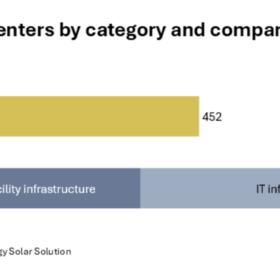
Data center energy spend rivals global solar investment
Rystad Energy says capital expenditure on data centers reached USD 770 billion in 2025, matching investment levels in photovoltaic infrastructure and surpassing upstream oil and gas.

Aggreko to deliver ‘Australia’s largest’ off-grid renewable hybrid power plant
Aggreko has unveiled plans to build what it says will be Australia’s biggest off-grid renewable hybrid power facility after signing a long-term power purchase agreement with the owner of Queensland’s largest proposed copper mine.

Singapore installs 504 MW of solar in 2025
Figures from Singapore’s Energy Market Authority indicate that the country had a record year for solar deployment in 2025. Cumulative capacity surpassed 2 GW, leading to Singapore’s 2030 solar target being increased to 3 GW.
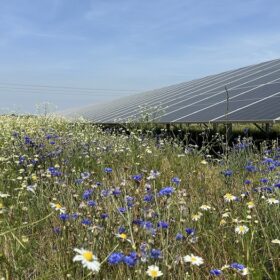
UK government approves record 800 MW solar plant over local opposition
The 800 MW PV project with battery storage has been granted planning approval by the Energy Secretary, despite local councils and campaigners raising objections. Springwell Solar Farm expected to connect to new National Grid substation being built to accommodate flurry of local grid-scale solar projects.
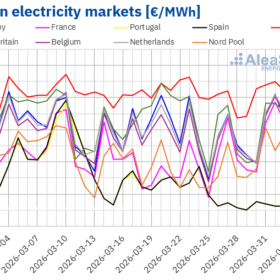
Negative electricity prices return to France, Germany
AleaSoft Energy Forecasting’s latest analysis finds negative hourly electricity prices returned to the French and German markets last week, while the British, Dutch and Nordic markets registered their lowest daily averages since October 2025 and the Belgian market saw its lowest daily average since May 2025.
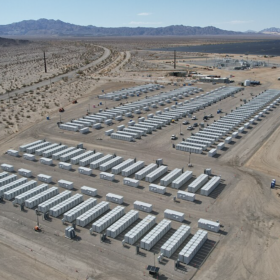
Batteries reshape solar pricing in California market
Aurora Energy Research has found that energy storage is raising the value of negatively priced solar electricity by up to $42/MWh in the California Independent System Operator (CAISO) wholesale market.

UK opens door to plug-in solar boom
In its first monthly column for pv magazine, experts from UK-based consultancy Ricardo, part of the WSP Group, explain how UK will soon allow low-cost plug-in solar panels under 800 W to be installed without a qualified electrician, making home solar more affordable and accessible. These portable systems, expected on sale by summer 2026, could significantly boost household solar adoption while complementing the country’s wider renewable energy growth.

Polysilicon prices sliding toward historical lows
Polysilicon prices have fallen sharply over recent weeks due to persistent oversupply and weakening demand, briefly dipping to low levels before stabilizing slightly above CNY 50 ($7.31)/kg, though still near historical lows and below production costs. OPIS analyst Summer Zhang tells pv magazine that despite policy signals and potential future regulations, unclear implementation and continued excess capacity mean market conditions remain weak, with further demand declines and possible production cuts or discounted sales expected in the near term.

Australia rooftop PV hits record as battery rush accelerates
Australia’s rooftop solar market has surged 19% in the past month with the latest data revealing a record 341 MW of small-scale rooftop PV capacity was registered across the country in March as consumers also raced to install battery energy storage systems.
