
Qcells confirms US customs detained solar cell imports from South Korea
Qcells has confirmed that US Customs and Border Protection (CBP) has detained an unspecified volume of its solar cell imports from South Korea. The company claims the cells do not contain components from Xinjiang, China and says it is working with CBP to resolve the issue.

Bhutan awards 120 MW solar contract
Bhutan has awarded a contract for the 120 MW Jamjee solar project to a consortium of local firm Rigsar Construction and India’s HILD Energy. The project will be the country’s largest solar installation once completed.

Pakistan adds 1.2 GW of net-metering capacity in H1
With no utility-scale projects set to come online this year, the growth of Pakistan’s solar market is being driven by net-metering installations. There were over 4,000 new net-metering connections pending by the end of June, with regulatory bottlenecks contributing to a growing backlog.
India approves solar cell makers with 13 GW of annual production capacity
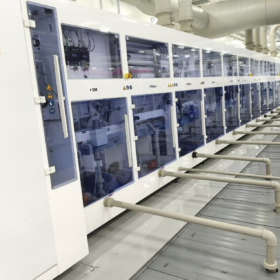
India has approved six manufacturers for its Approved List of Models and Manufacturers (ALMM) for solar cells, totaling 13 GW of annual production capacity. The list includes FS India (First Solar’s India unit), Jupiter, Emmvee, Mundra (Adani), Premier Energies, and ReNew.
Tindo Solar to scale output to 180 MW with Australian government grant
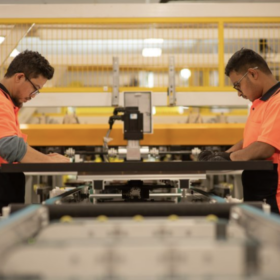
Australian solar module manufacturer Tindo Solar will look to ramp up domestic production capacity after securing funding through the federal government’s $1 billion Solar Sunshot Program.

China poised to remain dominant PV supplier through 2030
New research from Switzerland showed that the recent efforts to counterbalance the dominance of China in the PV industry may lead to “cost-significant” inefficiencies across the entire supply chain. The scientists found, however, that achieving regional supply chain goals can benefit the global PV ecosystem.
JinkoSolar files second patent lawsuit against Longi in EU court
JinkoSolar claims Longi’s high-end back-contact (BC) solar products infringe on a former LG patent, which is now held by Jinko.
California urged to fast-track 23 GW of renewables near gas plants
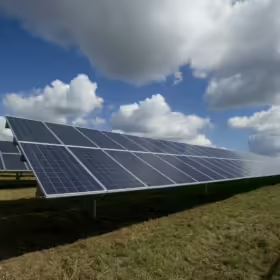
California could move quickly to enable 23 GW of renewables near existing thermal generators, in time for the projects to qualify for tax credits before they expire, says a think tank policy director.

UK installs 621 MW of PV in H1
Provisional data finds United Kingdom on course to add more than 1 GW in 2025 with revisions likely to show greater capacity as more plants are recorded. However, the pace of deployment must accelerate to hit 45-47 GW target by 2030.

Australia’s Waratah Super Battery starts operations as ‘shock absorber’
Australia’s Waratah Super Battery has begun operations, and will have the world’s largest power output when fully commissioned later in 2025.
