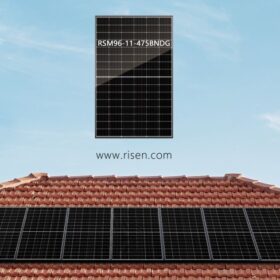
Risen presents 475 W TOPCon solar panel with 23.8% efficiency
Chinese solar module maker Risen Energy has introduced a 475 W bifacial solar module with a power conversion efficiency of 23.8% to the Australian market, targeting the rooftop market.

China’s SoleFiori to build 6 GW HJT solar module factory in Saudi Arabia
SoleFiori signed a deal to set up a 6 GW heterojunction (HJT) solar module plant in Saudi Arabia, supplying high-efficiency panels tailored for desert conditions.

Italy storage deployments rise sixfold in Q2 on utility-scale growth
Italy’s storage market rebounded in the second quarter as utility-scale systems drove a sixfold rise in deployments of 1 to 10 MWh units.
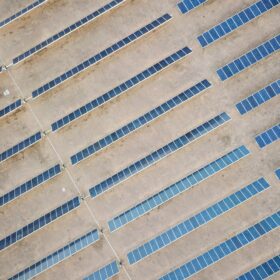
Chad plans 520 MW of solar by 2030
Chad plans to raise $1.1 billion to add 886 MW of power capacity, the majority of which is expected to be solar.

US grid-scale storage leaps 63%, residential 132%
A report from the American Clean Power Association (ACP) and Wood Mackenzie indicates the utility-scale energy storage sector added 4.9 GW in the April-to-June quarter, representing 63% year-on-year growth, while residential storage increased by 608 MW.

US solar pricing needs a reality check
Sustainable projects depend on prices – and suppliers – that hold up under compliance, delivery and long-term performance requirements.
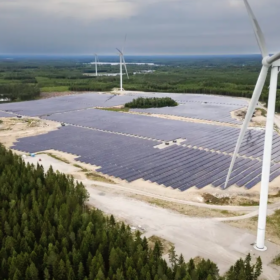
Sweden switches on 89 MW hybrid wind, solar project
The first hybrid power project belonging to Danish renewables developer European Energy is a 39.3 MW solar array tied to a 49.6 MW wind facility in southern Sweden.

KAUST achieves 28.7% efficiency in perovskite-perovskite-silicon tandem solar cell
An international team of researchers led by King Abdullah University of Science and Technology has fabricated a triple junction perovskite-perovskite-silicon tandem solar cell that achieved a world record efficiency for this cell architecture. The device incorporates stabilized perovskites that ensure improved performance and stability.

Australian utility plans 2 GW wind, solar and storage hub
Western Australian government-owned utility Synergy has submitted plans to build a 2 GW hybrid renewable energy hub including up to 500 MW of solar and 500 MW of battery energy storage capacity alongside what would be the biggest wind farm in the state.

Tata Power’s 4.8 GW cell capacity added to India’s manufacturing list
The Indian Ministry of New and Renewable Energy (MNRE) added Tata Power’s 4,813 MW of solar cell capacity to its Approved List of Models and Manufacturers (ALMM), lifting total ALMM-enlisted capacity to 17,880 MW.
