
BBDF 2025: Europe’s battery market is still immature
From the floor of the Battery Business & Development Forum 2025, the first session delivered insights around investment strategies in battery energy storage systems across Europe and the UK.
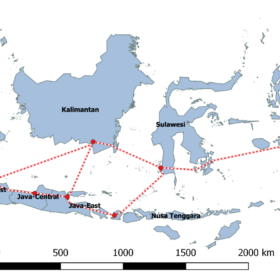
Solar energy to drive Indonesia’s transition away from coal, biofuels
The role of solar PV in Indonesia will extend beyond replacing coal-based electricity generation; it will also include the production of e-fuels for hard-to-abate segments, offering an alternative to land-intensive biofuel production. A recent study explores, through various scenarios, the cost-competitiveness of solar PV-based electrification in supporting Indonesia’s renewable energy transition.
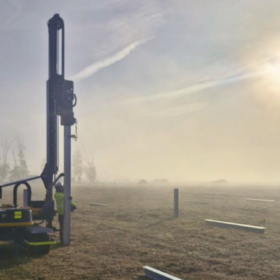
Pilecom begins work on 106 MW of solar in Australia
Construction of the 106 MW Lancaster Solar Farm in Victoria, Australia, is gathering pace. Western Australian contractor Pilecom is now installing the first of the more than 23,000 piles that will be used in the project.
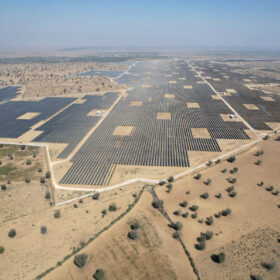
India achieves 50% clean power capacity five years ahead of target
India reached 484.82 GW of total installed power capacity as of June 30, 2025, with 242.8 GW from non-fossil fuel sources, including 8.8 GW nuclear, 49.4 GW hydro, and 184.6 GW from renewable energy.
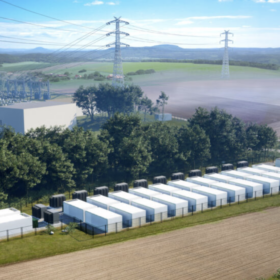
German court upholds grid connection charges for battery projects
Germany’s top court has ruled that distribution network operators may require battery storage projects to pay grid connection fees, calling the charges fair as they help prevent overbuilding and shield consumers from excess system costs.
Solar myths and misconceptions
In a new monthly column for pv magazine, the International Solar Energy Society (ISES) debunks old and new urban legends about solar energy.

Low-cost alternatives to solar-stalling ‘direct transfer trip’ requirements
The Coalition for Community Solar Access trade group says a utility requirement for “direct transfer trip” make many solar projects financially unviable, while researchers argue that the targeted safety risks can be addressed with lower-cost alternatives.

UK government extends CfD contract length to 20 years
Changes announced ahead of seventh Contract for Difference (CfD) allocation round widely viewed as key to achieving government’s clean power targets for 2030. Target commissioning window for solar projects also extended in anticipation of larger capacity projects.

Chinese PV Industry Brief: Tongwei, Longi, JA Solar announce H1 losses
Tongwei, Longi, and JA Solar have predicted steep losses for the first half of 2025, as persistent oversupply and falling solar module prices continue to pressure margins across China’s PV manufacturing sector.

Mexico introduces new rules for self-consumption
Mexico’s energy regulator has issued new provisions to streamline the permitting process for self-consumption power plants between 0.7 MW and 20 MW, aiming to improve legal certainty for project developers.
