
Fraunhofer showcases hydrogen microgrid platform
The Fraunhofer Institute for Machine Tools and Forming Technology IWU will showcase a new hydrogen microgrid platform at the end of March. The researchers say it could help to serve hospitals, remote rural areas and war-torn regions.

GB Energy invests in rooftop solar rollout for UK schools, hospitals
First Great British Energy project will see the state-owned renewables company roll out rooftop solar across around 200 schools and 200 National Health Service (NHS) sites in England. Monies for community energy groups and power schemes in Scotland, Wales and Northern Ireland included in investment package.

‘Bias, both conscious and unconscious, affects hiring and promotions’
This week, Women in Solar Europe (WiSEu) gives voice to Josef Kastner, the CEO of Austria-based Nexun. He says professional decisions must be based on ability, not gender. “Societal expectations influence leadership styles, but fairness is non-negotiable. Everyone deserves the same rights and opportunities,” he states.

Mandatory switch to smart meters on track in Flanders
Belgian grid operator Fluvius says it is on course to finish installing smart meters in all solar-powered homes in the Belgian region of Flanders by the end of this year.

Solar to take lead as India targets 500 GW of renewables by 2030
India aims to install 500 GW of renewable energy by 2030, with solar expected to account for nearly 300 GW.
Corporate PPAs with variable price structure achieve higher performance
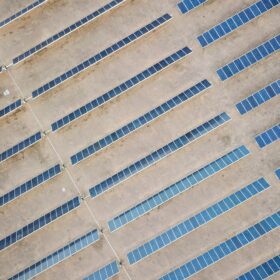
Researchers in Portugal have simulated 800 power purchase agreemeents across eight different contract type and have found that contracts with a variable price structure achieve higher performance. Their analysis considered net present value, contract performance deviation and volume residual as the main indicators.
Australian researchers advance halide perovskite cell stabilization
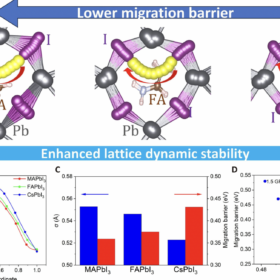
University of Sydney researchers have suppressed ion migration at the B-site in halide perovskites, reducing energy loss and improving solar cell stability and performance reliability.

Trump rescinds Defense Production Act support for solar manufacturing
US President Donald Trump has rescinded the Defense Production Act (DPA) designation for solar manufacturing and other clean energy technologies, reversing a Biden-era move to boost domestic production.
Solar wafer prices trend upward as China’s domestic demand surges
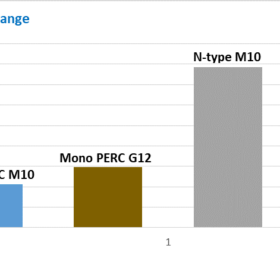
In a new weekly update for pv magazine, OPIS, a Dow Jones company, provides a quick look at the main price trends in the global PV industry.
EU launches partnerships to strengthen PV, advanced materials, textiles
The European Commission has established three Horizon Europe partnerships to improve technological prowess, industrial strength, and eco-friendly innovation, channeling nearly €1.1 billion ($1.19 billion) by 2030 into photovoltaics, advanced materials, and textiles.
