
The Hydrogen Stream: Fincantieri to build hydrogen-powered cruise ship
Fincantieri says it is building the world’s first hydrogen-powered cruise ship for delivery in late 2026, while Coca-Cola Bottlers Japan says it will debut the world’s first hydrogen-powered vending machine at the Kansai Expo this year.

Lithuania deploys 870 MW of solar in 2024
Lithuania added record solar capacity in 2024, pushing cumulative installations to nearly 2 GW, driven largely by residential systems and a favorable regulatory framework.

Oxford PV, Trina Solar enter patent licensing agreement for perovskite-silicon tandem solar
The exclusive license agreement covers the manufacture or sale of perovskite PV products for the Chinese market. A statement from Oxford PV says the agreement “underscores the industry consensus that perovskite-based PV technologies are the future of solar.”
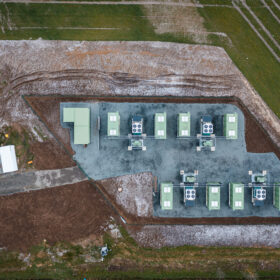
The rise of bankable BESS projects in Europe
As the renewable energy sector rapidly evolves, battery energy storage systems (BESS) are emerging as a critical pillar for decarbonization. However, with capital constraints and rising market volatility, not all projects are equally viable. At ABO Energy, we’re witnessing a shift in the investment landscape, where preparedness is the key to success.

Tender opens for solar minigrids in Fiji
The United Nations Development Programme (UNDP) is running a tender for solar minigrids and communication infrastructure in rural areas of Fiji. The deadline for submitting expressions of interest is April 17.

India adds 25.3 GW of module capacity, 11.6 GW of cells in 2024
Indian manufacturers built 25.3 GW of solar module manufacturing capacity in 2024, taking the nation’s panel capacity to 90.9 GW as of Dec. 31, 2024.
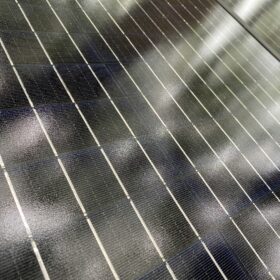
International PV module pricing may rise to $0.11/W by year end
International PV module prices, driven by Chinese averages, will likely rise from $0.08/W to $0.10/W today to $0.11/W by the end of 2025 and potentially $0.13/W by 2027, says Clean Energy Associates (CEA), noting that heterojunction and back-contact technologies now make up 12% of global module capacity.

Chinese PV Industry Brief: Solar stocks slide as US tariffs stoke concerns
Chinese solar stocks tumbled on April 7 after the US government announced new tariffs, with more than 120 PV-related shares falling and over 85 dropping more than 10%. Analysts downplayed the impact, citing the US market’s limited role in global solar demand.
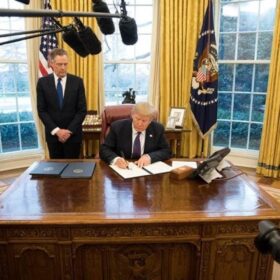
What Trump’s tariffs mean for US battery storage industry
Analysts see negative impacts across the board, but EV and battery energy storage industries seem particularly vulnerable to US President Donald Trump’s sweeping tariffs.
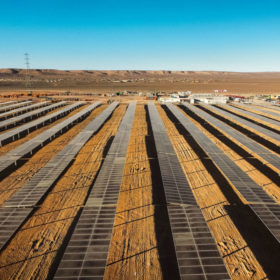
Peru plans to reach 3 GW of PV capacity by 2028
Peru aims to add 2.5 GW of new PV capacity by 2028 through 14 solar projects, bringing its total installations to nearly 3 GW, according to the Peruvian Ministry of Energy and Mines (MINEM).
