
PV topics dominated the International Solar Energy Society’s Solar World Congress 2025 in Brazil
In its latest monthly column for pv magazine, the International Solar Energy Society (ISES) promotes the biennial Solar World Congress (SWC), which took place in Fortaleza-Brazil in November 2025, a few days before the COP30. The SWC scientific program has traditionally been dominated by presentations on solar radiation and solar thermal applications, but this year, photovoltaics was the focus of most of the presentations. This reflects the massive adoption of PV all over the globe, which, at the current pace, will dominate the electricity mix by the end of the decade.

Technique Solaire buys Iberdrola’s French renewables unit
Technique Solaire says it is acquiring 100% of Iberdrola Renouvelables S.A.S., expanding its French onshore wind and solar portfolio with 118 MW of operating assets and a 639 MW development pipeline.
Hydro Tasmania seeking 1,500 GWh new solar, wind
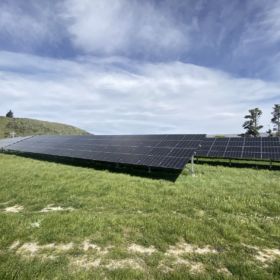
Hydro Tasmania is seeking to increase its renewable energy generation to meet growing energy demand and support the Australian state’s industrial expansion.
Global grid-scale BESS deployment rises 38% through October
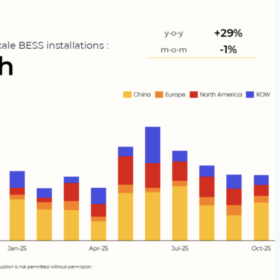
Global grid-scale battery energy storage system (BESS) deployments have hit 156 GWh year-to-date. Over 153 GWh are still slated for commissioning in 2025, though delays and cancellations are likely to trim that total by year-end.
Indian utility seeks land for new grid-connected solar project
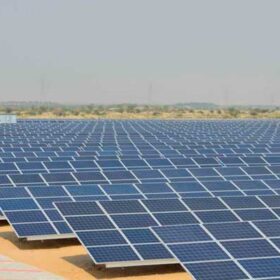
NLC India Ltd. says it has issued a tender for contractors to secure and develop 1,850 acres across multiple states for a solar power project connected to India’s inter-state transmission system (ISTS) on behalf of NLC India Renewables Ltd (NIRL).

When solar meets next-gen nuclear
Scientists in China have proposed a novel scheduling framework for microgrids based on hybrid PV and a small modular nuclear reactors. The framework uses multi-objective distributionally robust optimization with a real-time reinforcement learning mechanism and is reportedly able to reduce operational costs by 18.7%.

US energy offices folded into new structure at Department of Energy
The US Department of Energy (DoE) has removed renewable energy, grid modernization, and carbon-management units from its organizational chart and consolidated them into the Office of Critical Minerals and Energy Innovation, a shift confirmed in newly published federal documents.

Italy issues new rules for PV project siting, solar fiscal breaks
The Italian government has reduced the regions’ influence on permits for photovoltaic and wind energy by centralizing the decision-making process. It has also issued new rules for tax relief under the so-called Transizione 5.0 Decree.

Brazil distributed solar market set for lower annual additions in 2025
Brazil installed 6.4 GW of distributed solar capacity between January and September 2025, down 12% from the same period in 2024, and current installation rates point to about 8.5 GW for the full year as residential and commercial segments weaken and regulatory reporting delays persist.

Japan’s PV module shipments hit 1.28 GW as residential demand accelerates
Japan’s solar module shipments reached 1.28 GW in the first quarter of fiscal 2025, supported by strong residential demand and ongoing dominance by foreign manufacturers, with domestic production limited to just 5% of total output, according to the Japan Photovoltaic Energy Association (JPEA).
