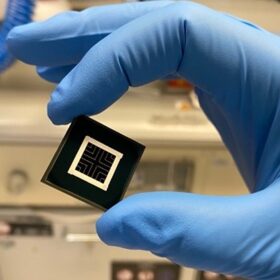
Fraunhofer ISE concludes perovskite-silicon tandem solar cell project
The five-year MaNiTU project, involving six Fraunhofer institutes, covered a range of investigations across the life cycle of perovskite-silicon tandem solar cells. It included the development of a scalable solar cell with a 31.6% power conversion efficiency.

Czech parliament backs plan to retroactively cut solar feed-in-tariffs
The Czech lower house of parliament has approved plans to retroactively cut feed-in-tariffs (FIT) for solar projects built between 2009 and 2010. The local solar sector has continued to criticize the planned law changes, which still need approval from the upper house.
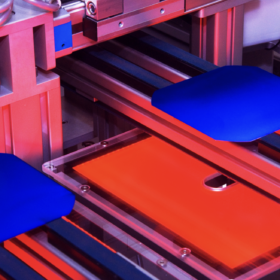
US doubles solar polysilicon and wafer tariffs on China
The US government has doubled Section 301 tariffs on imported solar polysilicon and wafers from China to 50%. The materials are vital for manufacturing solar panels, from refining polysilicon to assembling modules.

pv magazine Roundtables Europe: EU guidance for PV confirmed in agrivoltaics session
The European Commission will publish guidance on agrivoltaics as part of a wider document covering innovative technologies, attendees at pv magazine Roundtables Europe 2024 heard. More than 1,300 guests joined pv magazine’s live event on Dec. 5, which covered topics ranging from quality and European manufacturing to energy storage and solar cell technology.

Unimacts to expand Houston facility for steel solar frame production
Origami Solar sees an opportunity to supply module manufacturers in the US market who are switching from imported aluminum frames to domestically made steel frames.
Australia’s batteries surf revenue wave on back of volatile power prices
Investments in battery storage within Australia’s National Electricity Market (NEM) are increasingly profitable due to higher power price volatility and changing market dynamics, according to the latest report by Wood Mackenzie. Going forward, four-hour storage systems are projected to have fastest return on investment.

Suriname starts building hybrid solar microgrids to power 25 villages
PowerChina is building three hybrid solar microgrids in Suriname, combining solar panels, energy storage, and diesel backup to power 25 remote villages across the country.

France deployed 3.5 GW of new solar in January-September period
France added an additional 3.5 GW of solar during the first three quarters of this year, compared to 2.3 GW during the same period of 2023. The country’s total installed solar capacity now stands at 23.7 GW, including 22.9 GW in mainland France.
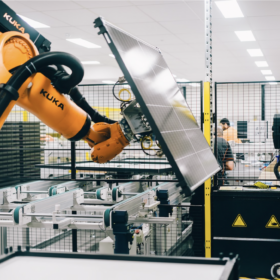
New report urges Australia to reduce solar supply chain reliance on China
A new report by the United States Studies Centre (USSC), a joint venture of the American Australian Association and University of Sydney, encourages Australia to deeply engage in global solar supply chains and reduce its reliance on China.
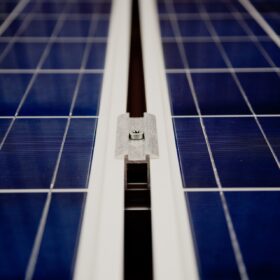
Cooling PV modules with lauric acid and nanoparticles
Thai researchers developed three organic phase-change material (PCM) mixtures with nanoparticles to cool PV modules and improve efficiency. They used lauric acid blended with aluminum oxide, copper oxide, and magnesium oxide in an optimal 94:6 weight ratio, boosting module efficiency by up to 14.11%.
