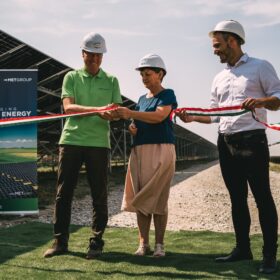
MET Group completes 23.4 MW of solar in Hungary
Switzerland-based energy producer MET Group has finished building a 23.4 MW solar project in eastern Hungary. It will generate enough energy to supply around 13,000 local homes and has a life expectancy of 30 years.

‘Retention isn’t just about accommodating maternity leave’
This week, Women in Solar Europe (WiSEu) gives voice to Laure-Aline Baheux, Power & Renewables BL Manager at Omexom – Vinci Energies. She says companies must ask why they need more women, and reflect on the challenges of recruiting and retaining them. “It’s essential to adapt job offers and career paths. For instance, recognizing that women often apply only when they meet more qualifications than men,” she states.

Price range for US-delivered modules widens
In a new weekly update for pv magazine, OPIS, a Dow Jones company, provides a quick look at the main price trends in the global PV industry.
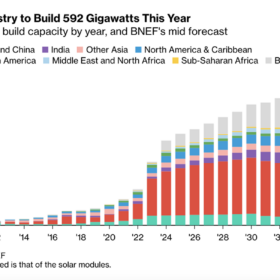
Solar module installations could hit 592 GW in 2024
BloombergNEF says the global solar industry will install 592 GW of modules this year, up 33% on 2023. The consultancy has also lowered its estimate for 2024 polysilicon production, as manufacturers are temporarily scaling back output.
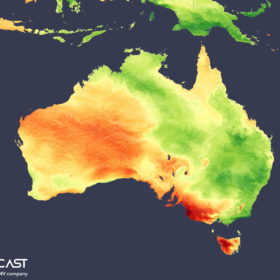
Extreme weather patterns deliver mixed solar results across Australia
In a new weekly update for pv magazine, Solcast, a DNV company, reports that Australia experienced extreme and diverse weather throughout July and August, resulting in varied impacts on solar irradiance across the country’s states.
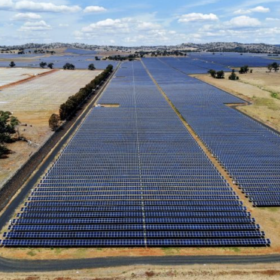
Australian solar generation soars 21% in 2022-23 period
The Australian government’s Energy Update 2024 shows that solar generation grew 21% in the 2022-23 period and is 11 times higher than a decade ago, jumping 3% in each of the past two years.
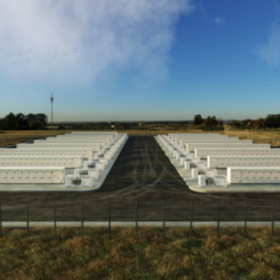
Texas utility CPS teams with Eolian on 1.4 GWh of battery storage
CPS Energy is working with Eolian on 1.4 GWh of battery storage to serve the energy needs of San Antonio, Texas, over a period of 20 years. The projects have been touted as the largest standalone battery site under the Electric Reliability Council of Texas (ERCOT).
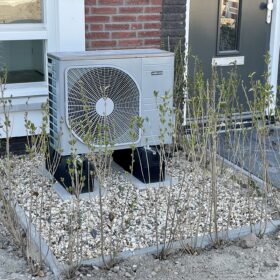
Dutch scientists assess consumers’ willingness to pay for renewable heating
A survey of 1,797 residents was used to determine the willingness to pay for low-carbon residential heating in the Netherlands. On average, respondents were willing to pay a premium of 33% for electricity-based heating. Policy recommendations were also provided as part of the study.

Scientists unveil desert solar modules with higher performance ratio, reduced temperature sensitivity
Researchers in Morocco have carefully configured and tested a novel desert solar module optimized for harsh desert climates. The new design delivered a 5.8% improvement in performance ratio, a 1.95% increase in efficiency, and reduced temperature sensitivity by 0.85% compared to standard modules.

Alpine PV has LCOE ranging from €0.097/kWh to 0.162/kWh
New research from Switzerland shows that capex costs for Alpine PV projects in Switzerland currently range between €2,231/kW and €4,182/KW for ground-mounted projects and up to €3,802/kW and €7,108/kW for wall-mounted and floating projects, respectively.
