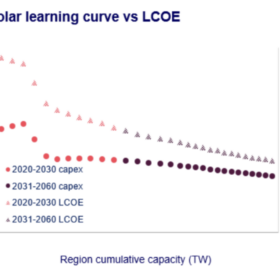
Wood Mackenzie records solar LCOE of $37/MWh in MENA region
Wood Mackenzie researchers say single-axis PV offers the lowest utility-scale generation costs globally, with efficiency gains and stable supply chains expected to drive down solar’s levelized cost of electricity (LCOE).
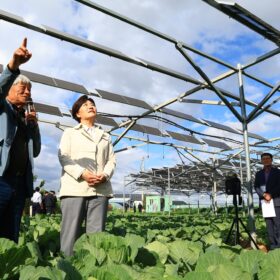
South Korea to introduce rules for agrivoltaics
South Korea has announced plans to introduce legislation next year to expand the deployment of agrivoltaics, enabling broader use of solar panels on agricultural land.

East and Southeast Asia’s solar pattern flips as La Niña develops
In a new weekly update for pv magazine, Solcast, a DNV company, reports that Southern and Western China enjoyed above-average irradiance in September, while eastern parts of the country experienced wetter conditions.

‘Solar modules could be produced in Europe at €0.15/W’
At the Modules and Material Worksop in Konstanz, organized by solar manufacturing engineering company RCT Solutions and ICS Konstanz, experts from the European PV equipment production industry gathered to discuss the current and future trajectory of manufacturing costs, technology advancements and equipment and raw material capabilities. RCT Solutions CEO, Peter Fath, told pv magazine that a European 1 GW module assembly facility using the same supply chain as Chinese Tier 1 counterparts could reach module manufacturing costs of €0.11-0.12/W.
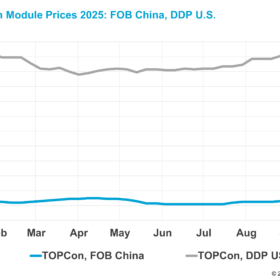
China module prices climb 1.14%, industry awaits polysilicon consolidation plan
In a new weekly update for pv magazine, OPIS, a Dow Jones company, provides a quick look at the main price trends in the global PV industry.

Opes Solar Mobility starts VIPV module production
Opes Solar Mobility has opened a 12,000-square-meter facility near Leipzig, Germany, to produce flexible photovoltaic modules for commercial and recreational vehicles, supplying partners across Europe, Africa, and South America.
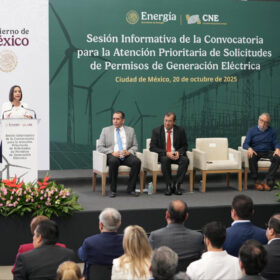
Mexico launches call to assign power generation permits
Mexico has opened a call for proposals for generation and interconnection permits to integrate new projects into the national electricity system under an accelerated evaluation mechanism aligned with binding planning.

Colombia funds solar program for low-income homes with $2.1 billion
Colombia has approved COP 8.35 trillion ($2.1 billion) for its Colombia Solar program to equip 1.3 million low-income households with PV systems between 2026 and 2030.
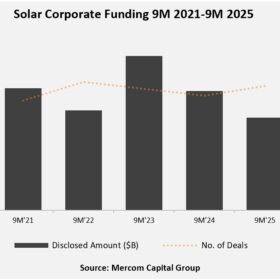
Solar sector corporate funding falls 22% year-over-year
Venture capital, public market, and debt financing into the solar industry reached $17.3 billion through the first 9 months of 2025, said Mercom Capital Group.
Australian nonprofit launches incubator for mid-scale solar, battery projects
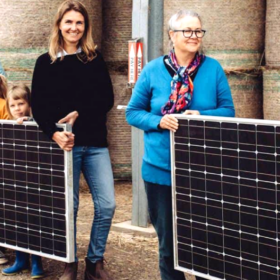
Australia’s Community Power Agency has launched a two-year incubator to provide funding, mentoring and investor connections for local groups developing mid-scale solar and battery storage projects.
