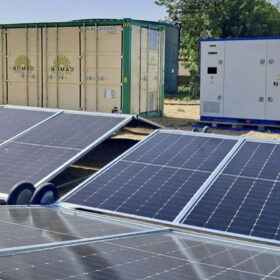
Spanish startup offers portable solar-plus-storage generators for irrigation
Spanish startup Nomad Solar Energy and Full&fast have deployed a portable solar-plus-storage system at a Madrid farm to provide off-grid power for irrigation.

Gautam Solar unveils 630 W TOPCon module for utility-scale solar projects
Gautam Solar has introduced 630 W R-Series tunnel oxide passivated contact (TOPCon) modules for utility-scale PV projects, approved under India’s Approved List of Models and Manufacturers (ALMM) and Bureau of Indian Standards (BIS).

Puerto Rico to open first solar module factory
Solar module manufacturer Solx, a new player in the industry, is expected to soon open Puerto Rico’s first module manufacturing factory.

Enpal unveils residential heat pump for large heating loads
The German company is introducing its own heat pump with a heating output of up to 16 kW and a maximum flow temperature of 80 C. The system is designed to meet rising demand in large single-family homes and unrenovated existing buildings.
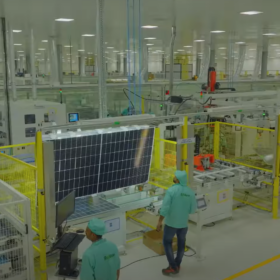
India solar module, cell prices fall after GST cut to 5%
ReNew Energy Global Plc (ReNew) cut solar equipment prices after India lowered its goods and services tax (GST), which is expected to reduce costs for utility projects, rooftop systems, and farm pumps.

How rooftop solar can complicate residential real estate transactions
Many homeowners assume leased or loaned solar systems will boost their home’s value, but outstanding loans often drag down equity instead.
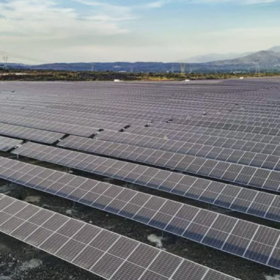
Banks fund $65 million for 100 MW solar project in Turkey
The Asian Infrastructure Investment Bank (AIIB) and Industrial Development Bank of Turkey (TSKB) have each contributed $32.5 million toward a senior debt financing package for a 100 MW solar project in southern Turkey.

Storm-proofing your solar data
Extreme weather is no longer a rare event for PV sites across the United States. It’s a costly, recurring reality eroding performance, reliability, and profitability. Wayne Burnett, chief strategy officer and chief technology officer at sensor equipment supplier EKO Instruments, offers insights from projects in hard-hit regions. With lessons learned from the US, Europe, Asia, and the Middle East, he examines how these are shaping best practices for long-term energy yield and resilience.

‘Preaching to the unconverted’ – EUPVSEC 2025 kicks off in Bilbao
The annual European Photovoltaic Solar Energy Conference (EU PVSEC) got underway today, this year in Bilbao. Conversations on the first morning focused on the need for strong policy support across multiple areas of renewable energy. While the week is sure to be filled with new ideas on the technological side, it’s clear that ensuring policies to support further growth in renewable energy is a growing challenge. Those working in the solar industry and research community need to reach a wider audience, and one that may not be as easy to convince.

Iraq inaugurates first phase of largest solar plant to date
The first phase of the Karbala solar power plant, totaling 22 MW, is now online. Its capacity is expected to reach 75 MW within the next two moves, ahead of a final 300 MW target.
