
Tata subsidiary commissions NHPC solar project in India
Tata Power Renewable Energy Ltd. (TPREL) says its new 300 MW solar project in the Indian state of Rajasthan uses domestic tech under the nation’s domestic content requirement (DCR).

Romania advances municipal storage buildout, 500 MWh battery project
Romania’s new €150 million ($173.8 million) municipal storage program could add 385 MW of capacity and coincides with financing for one of the country’s largest standalone battery projects, according to the government.
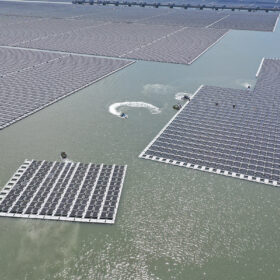
Taiwan tightens rules for ground-mounted, floating solar
Revisions to Taiwan’s Environmental Impact Assessment Act, Tourism Development Act and Geology Act introduce requirements for environmental impact assessments prior to development of solar projects, and rules out solar installations larger than one hectare in scenic spots and geographically-sensitive areas.
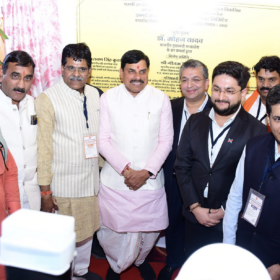
Jakson Group starts 6 GW ingot-to-module manufacturing project in India
Jakson Group says construction has begun on the first phase of a 6 GW ingot-to-module complex in the Indian state of Madhya Pradesh.

‘Inclusive leadership requires a very specific set of competencies’
This week Women in Solar+ Europe gives voice to Clémence Leclair, ESG Manager at Germany’s Belectric. She says active listening, empathy, and self-reflection are are essential components of strong leadership within the renewable-energy industry. “As professionals in research and development already know very well, there is rarely just one path to excellence. In fact, some of the most unconventional approaches can turn out to be the most effective or innovative,” she states.

Spain allocates €2 billion to expand clean energy and industry programs
Spain’s Ministry for Ecological Transition says a new €2 billion ($2.3 billion) funding package is designed to accelerate industrial capacity, expand renewable deployment, and boost the country’s long-term energy resilience.
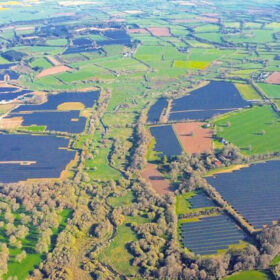
Ireland surpasses 2 GW of installed solar capacity
Ireland’s national solar capacity has risen to 2.1 GW as buildout has accelerated since the first utility-scale project came online in April 2022.
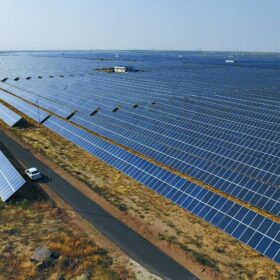
What can South Korea learn from India’s rapid solar deployment?
Korean policy analyst focusing on solar power plant siting and permitting, Daun Kim, has reported on her recent trip to India’s Bhadla Solar Park. The analyst highlights how clear siting policies and streamlined permitting helped India scale renewables, something that South Korea can learn as it pursues a 100 GW renewable energy target by 2030.
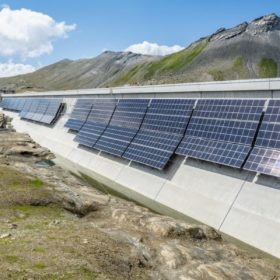
Switzerland forecasts 1.5 GW annual solar growth through 2027
Swissolar’s “Solar Monitor 2025” report projects annual PV additions of about 1.5 GW through 2027 and urges policymakers to sustain steady growth amid policy uncertainty and lower tariffs.
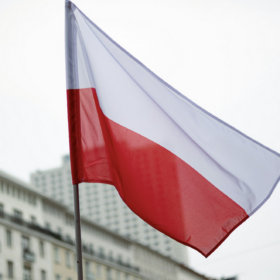
Poland raises permit-free energy storage limit to 30 kWh
Poland’s lower house of parliament, the Sejm, has passed amendments to the Building Law to remove the requirement for building permits to construct energy storage facilities with capacities of up to 30 kWh.
