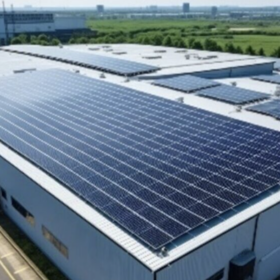
German rooftop PV tender undersubscribed as prices hold
Germany’s Federal Network Agency (Bundesnetzagentur) awarded 155 MW of rooftop PV capacity at an average of €0.0956 ($0.11)/kWh, leaving nearly half of the 283 MW tender volume unallocated.

Italy targets 16 GWh storage auction under MACSE scheme
Italy’s energy regulator ARERA has approved a proposal from the Ministry of the Environment and Energy Security to target 16 GWh of storage capacity in the 2029 MACSE auction, while urging caution on final volumes to reflect existing pipeline capacity.

U.S. national laboratories lead multi-agency push for solar cybersecurity standards
The U.S. Department of Energy is deploying a research framework across four national laboratories to harden the domestic power grid against digital vulnerabilities as solar deployment accelerates.
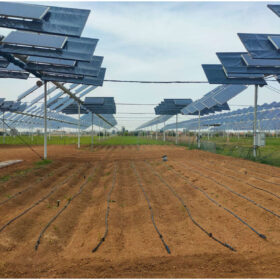
Multi-year field study finds that agrivoltaics can support healthy potato yields
Multi-year field trials conducted in Italy show that agrivoltaic systems can support healthy potato yields without major losses. Strategic shading and dynamic light management during critical growth stages proved key to maintaining productivity.
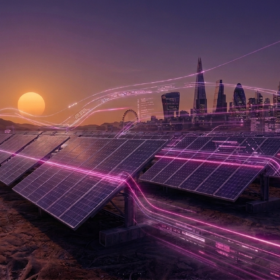
UK defining stronger energy cybersecurity rules after Poland attack
The UK government is proposing stronger cybersecurity rules for electricity and gas sectors, prompted by recent attacks on European energy infrastructure, including a recent incident involving solar power plants in Poland. The plans would extend baseline cybersecurity requirements to all licensed energy organizations and could also adjust compliance thresholds under NIS regulations.
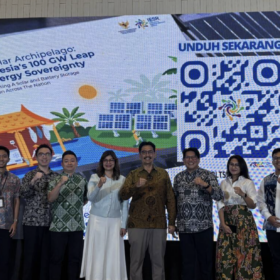
Indonesia’s path to 100 GW of solar
A study from the Institute for Essential Services Reform and Indonesia’s Coordinating Ministry for Economic Affairs explores how Indonesia can turn its target of deploying 100 GW of solar from mandate to mobilization.

‘Be kind to yourself and patient with your journey’
This week Women in Solar+ Europe gives voice to Irene Mihai, Policy Director at the Romanian Photovoltaic Industry Association (RPIA). She says her personal experiences show how mentorship, collaboration, and inclusive workplace practices are essential for attracting and retaining talent while empowering the next generation to contribute to a sustainable future.

US ITC opens Section 337 probe into global TOPCon supply chain
The US International Trade Commission (ITC) has opened a Section 337 investigation into tunnel oxide passivated contact (TOPCon) solar cells, modules, panels, and related products following a complaint by First Solar, naming 47 entities across 11 countries as respondents.

What are the selling points of marine energy?
Marine energy is renewable and generally predictable. It could thus compensate for the unplanned intermittency of solar and wind generation, its proponents argue. But several challenges still need to be overcome for the energy to become widely used.
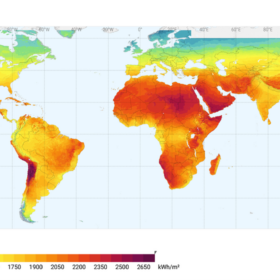
Solar generation performance with regional weather conditions deviating from long-term averages
Global solar PV continues its rapid growth, reaching around 650 GW in 2025, with record solar irradiation extremes across regions such as East Asia, India, and Latin America. With current production capacity and emerging technologies like perovskite-silicon tandem modules, PV is poised to surpass all other electricity generation technologies combined by the end of the decade.
