
India sees dramatic plunge in battery storage costs, ministry reports
Market trends suggest battery energy storage systems (BESS) will likely operate 1.5 cycles per day, bringing the effective storage cost down to just INR 2.8/kWh (0.031/kWh), the Ministry said on Monday.
French renewables tender awards all 507.7 MW to solar
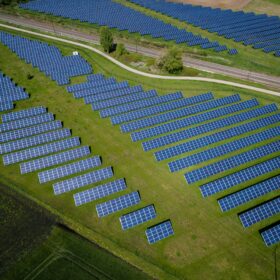
The French government says PV swept its latest technology-neutral auction, with 36 projects totaling 507.7 MW awarded in the fourth round as prices fell and agrivoltaics gained ground.
Hungary launches $305 million subsidy for residential battery storage
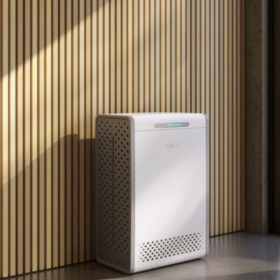
The Hungarian government says its new HUF 100 billion ($305.4 million) program will support 10 kW home battery systems to boost solar self-consumption and cut evening-peak demand.

Canada opens review into anti-dumping duties on Chinese PV modules, laminates
Canada’s International Trade Tribunal is running an interim review of the country’s anti-dumping and countervailing duties on solar modules and laminates from China, following a request to exclude flexible solar panels that affix to curved surfaces.

Interspace single-axis agrivoltaics has lowest environmental impact in Europe
A group of scientists has simulated fixed vertical, interspace and overhead single-axis as well as overhead dual-axis agrivoltaic systems for 30 years and has found interspace single-axis system emerged as the most environmentally favorable configuration in Europe.

‘We’re taught to only apply for roles when we can tick every box’
This week Women in Solar+ Europe gives voice to Gemma Buckley, Chief Legal Officer at UK-based Solarport. She says that one of the most persistent barriers wome are witnessing is how they are socialised. “Research shows men apply for promotion or a new role when they’re 60% qualified; women wait until they’re 100% qualified. I’ve watched this play out throughout my career,” she states.
Italy assigns 1.1 GW in PV auction open to projects with ‘non-Chinese’ modules
The procurement exercise, the second solar auction under Italy’s Fer X incentive scheme and first to exclude the use of Chinese solar modules, cells and inverters for projects above 1 MW in size, concluded with a final average price of €0.06637/kWh.

Türkiye publishes rules for floating solar
Türkiye has published a regulatory framework covering the legal basis for developing floating solar plants on reservoirs and dams. The rules establish where floating solar can and cannot be built and how projects can be approved.
Small islands, big impact: the role of solar PV for the tropics
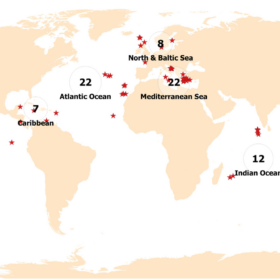
Low-cost renewables provide an opportunity for tropical islands to drive a sustainable, secure and self-sufficient economy. Solar PV emerges as the bulk energy provider, driven by excellent resource conditions and fast-improving economic attractiveness. The anticipated momentum of solar PV in tropical islands can best be characterised as a Solar-to-X Economy.
Brazil to add 11.4 GW of solar in 2025 despite regulatory hurdles
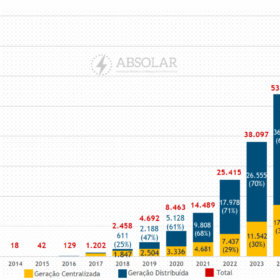
Brazilian photovoltaic association ABSolar says solar capacity additions may fall 24% to 10.6 GW in 2026 from 15 GW in 2024, with regulatory barriers, high capital costs, and restricted self‑generation access slowing investment and reducing jobs.
