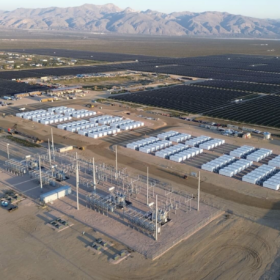
California activates $2 billion solar and energy storage facility
Arevon Energy has completed the $2 billion, two-phase Eland solar-plus-storage project in Kern County, California, which will supply about 7% of Los Angeles’s electricity demand.

Indonesia unveils plan for 100 GW of solar
The new initiative features plans for 80 GW of 1 MW solar minigrids with accompanying battery energy storage, to be deployed across 80,000 villages, alongside 20 GW of centralized solar power plants.

Is China’s $7 billion plan to reduce polysilicon overcapacity feasible?
OPIS, Wood Mackenzie, and Bernreuter Research have spoken with pv magazine about China’s alleged $7 billion plan to reduce polysilicon oversupply and restore a sustainable pricing environment for the PV supply chain, but opinions remain divided on its feasibility and effectiveness.
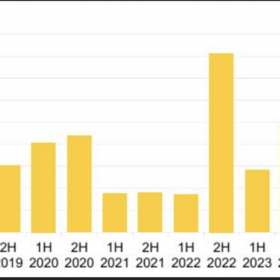
Australia faces slowdown as investment in solar and wind falls 64% in 2025
Investment in new large-scale solar and wind in Australia fell by 64% year on year in the first half of 2025 as grid bottlenecks, slow planning approvals, higher costs, and social licensing issues took a heavy toll.
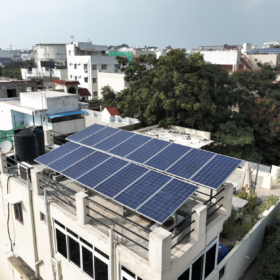
India mandates rooftop monitoring and inverter integration for 30 GW of solar
India’s renewable energy ministry has issued draft rules requiring all solar inverters installed under its 30 GW rooftop program to link directly to national servers, aiming to improve grid stability and cybersecurity. Industry groups back the plan but warn of high compliance costs, supply chain constraints, and uneven connectivity.
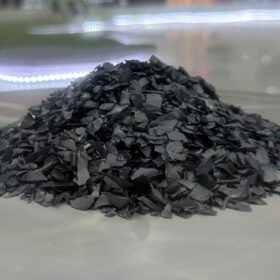
Chinese PV Industry Brief: Government targets energy use at polysilicon plants
China’s Ministry of Industry and Information Technology (MIIT) has launched a 2025 inspection program targeting energy consumption at 41 major polysilicon producers to curb output.

Slovenia deploys 85 MW of solar in H1
Slovenia installed 85 MW of solar in the first half of 2025, driven by growth in commercial and industrial (C&I) projects and utility-scale installations. The lowest total in four years reflects a sharp decline in residential installations, despite continued subsidies for residential hybrid systems.

‘Once people recognize your expertise, respect tends to follow’
This week Women in Solar+ Europe gives voice to Ksenia Dray, Global Solar Leader at France’s RES. She says she witnessed a significant shift in gender inclusion across the renewable energy industry over the years. “I also see a new wave of purpose-driven professionals entering the sector, and many of them are women drawn by the opportunity to make a difference,” she states.

US opens next round of solar import probes targeting India, Indonesia, Laos
The US Department of Commerce has initiated full investigations into anti-dumping and anti-subsidy cases against solar imports from India, Indonesia, and Laos filed in July. These investigations, conducted alongside the US International Trade Commission (ITC), are expected to continue into next spring.
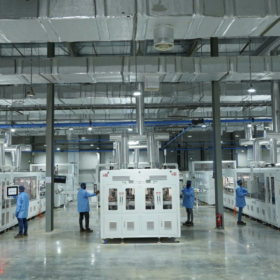
India’s PLI scheme drives 18.5 GW of solar module capacity up to June
India’s Production Linked Incentive Scheme for High Efficiency Solar PV Modules (PLI) has led to 18.5 GW of module capacity, 9.7 GW of solar cell capacity and 2.2 GW of ingot-wafer capacity being established as of June 30 2025. The program has awarded a total of 48 GW of module manufacturing capacity.
