Cyprus installs 122 MW of solar capacity in 2025
Self-consumption PV projects accounted for most of the new solar capacity added in Cyprus last year, despite record levels of renewable energy curtailment, according to industry data.
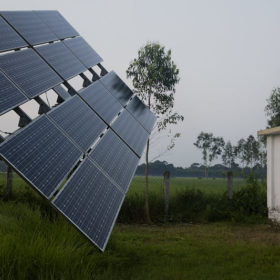
Bangladesh signs PPAs for 523 MW of solar capacity
The Bangladesh Power Development Board (BPDB) has signed power purchase agreements with seven solar projects totaling 523 MW, marking a renewed push for utility-scale solar following the reinstatement of previously canceled approvals.

EU installs 27.1 GWh of battery storage in 2025 as utility scale leads
The European Union added 27.1 GWh of battery energy storage capacity in 2025, with utility-scale systems accounting for the majority of new installations as residential storage declined amid lower electricity prices and reduced support schemes, according to a new report from SolarPower Europe.

Netherlands’ 2025 solar additions estimated at 2.08 GW
Provisional estimates from Dutch New Energy Research indicate the Netherlands added 0.54 GW of residential solar and 1.54 GW of C&I and large-scale solar last year, taking the country’s cumulative capacity to just shy of 30 GW.
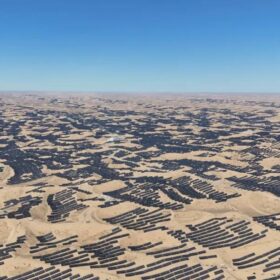
China adds 315 GW of solar in 2025
China installed a record 315 GW (AC) of new solar capacity in 2025, lifting cumulative installed PV capacity to 1.2 TW and pushing non-fossil power sources past thermal generation for the first time.

Germany launches instantaneous reserve market, opening door to storage
Germany has launched a market-based mechanism for procuring instantaneous reserve, allowing inverter-based assets and battery energy storage systems (BESS) to participate for the first time, creating new revenue opportunities while raising questions over long-term profitability and regulatory risk.

Ukraine deploys 1.5 GW of solar in 2025
The Solar Energy Association of Ukraine estimates around 1.5 GW of solar was added in the country last year, driven by growing interest in projects co-located with battery energy storage systems across market segments.
EU opens probe into Bulgaria compensation award to foreign investor
The European Commission has launched an in-depth investigation to assess whether a €61 million ($71.6 million) arbitration award in favor of Malta-based ACF Renewable Energy is compatible with EU State aid rules.

U.S. government cuts $83 billion in loans, reversing energy transition funding
The U.S. Department of Energy moved to de-obligate or revise billions in financing for clean energy projects while prioritizing natural gas and nuclear power.

‘I would encourage women to be attentive to how men address each other’
This week Women in Solar+ Europe gives voice to Melodie de l’Epine, Senior Project Manager/ Head of Research & Innovation at France’s Becquerel Institute. She says that ncouraging men to shift from strict hierarchy to informal exchanges fosters more equitable rapport. Women can benefit from noticing how men address each other and consciously joining in, since subtle forms of address strongly shape power perceptions.
