
India to mandate energy storage for solar, wind projects
India is likely to follow in the footsteps of China and mandate the inclusion of battery storage capacity for future wind and solar energy projects.
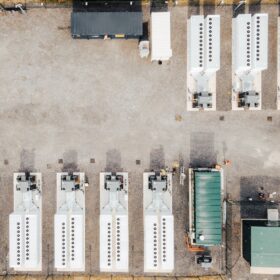
UK plans for 23 GW battery storage fleet by 2030
Clean Power 2030 plan unveiled by UK government includes key role for battery energy storage systems (BESS) in providing short-term flexibility. Support for long-duration energy storage (LDES) and changes to standing charges for behind the meter storage also proposed.
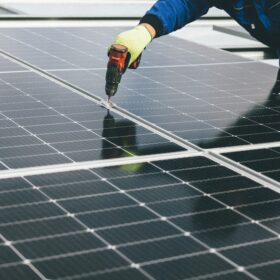
UK solar industry must transition to circular economy, says NICER
The National Interdisciplinary Circular Economy Research (NICER) program says in a new report that the UK solar industry could generate 1.2 million tons of waste by 2050. It calls for circular economy measures to meet net-zero and solar deployment targets.

Montenegro to launch 300 MWh battery storage tender
Montenegro’s Elektroprivreda Crne Gore (EPCG) has upped the ante for its first battery energy storage tender.

ESMC publishes recommendations for restoring Europe’s solar industry
The European Solar Manufacturing Council’s (ESMC) working group has issued a recommendation paper praising the Net-Zero Industry Act (NZIA), but says clearer and stronger support is needed for European solar production.
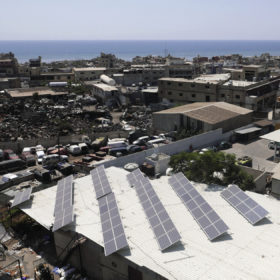
Israeli strikes destroy 150-200 MW of solar in Lebanon
Israel’s recent strikes have reportedly destroyed or damaged 400,000 to 500,000 solar panels, costing Lebanon an estimated 150 MW to 200 MW of installed solar capacity, according to Pierre El Khoury, former director and president of the Lebanese Center for Energy Conservation (LCEC).

Australian renewables to dominate generation in nuclear future
The Australian opposition has released energy plan modeling showing nuclear power could be up to 44% cheaper than current government projections, while forecasting that renewable generation will continue to dominate electricity production.

Trump touts solar trade tariffs
While the US Inflation Reduction Act (IRA) is reshoring solar manufacturing in the United States, raising import tariffs may slow momentum. The actions of the incoming Trump administration are tough to forecast at this point.

Indonesian think tank says nation at crossroads with energy transition
The Jakarta-based Institute for Essential Services Reform (IESR) says 2025 will be a pivotal year for Indonesia’s energy transition, as the nation has fallen behind targets in recent years. It seeks to shift fossil fuel subsidies to renewables and is urging the government to implement a clear, measurable plan for the upcoming national energy policy.

‘Equity requires addressing structural barriers in hiring and promotions’
This week, Women in Solar Europe gives voice to Eyerusalem Mekuria Wondemu, Project Engineer at Switzerland’s Gruner Stucky SA. She says changes in career paths are slow due to entrenched cultural norms and unconscious prejudices, but growing advocacy and representation drive progress. “Mentorship, continuous learning, and networking are critical,” she states.
