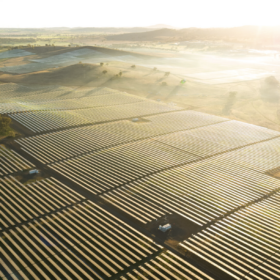
Ultra-low-cost solar could enable 2,000 GW market in Australia
Researchers from the Australian Centre for Advanced Photovoltaics say ultra-low-cost solar could deliver 1,000 TWh annually for domestic use and 2,600 TWh for exports under Australia’s long-term energy transition scenarios.
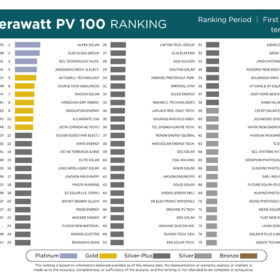
Who are the Top 100 PV manufacturers today?
The Terawatt PV 100 ranks the top 100 solar manufacturing companies using a new methodology based on production scale, financial strength, and corporate transparency, with Tongwei leading the Q1 2026 list and most top firms headquartered in China. The analysis highlights increasing global supply-chain scrutiny driven by tariffs and ESG mandates, while also showing rising influence from Indian companies and strong positions for key materials and equipment suppliers.
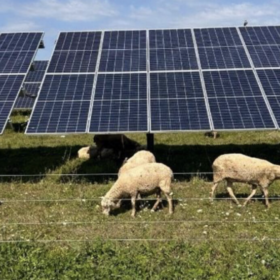
Solar sheep grazing delivers margins up to 40% in new study
Researchers at Western University say agrivoltaic sheep grazing models in Ontario outperform traditional farming, with higher margins and dual revenue streams from livestock and solar site services.
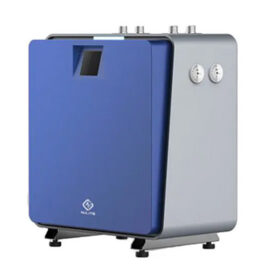
Nulite launches PV-driven residential heat pump
The Chinese manufacturer has unveiled a hybrid photovoltaic–geothermal heat pump system that uses solar electricity to directly power the unit, boosting efficiency and self-consumption. The 8–112 kW ground- and water-source system delivers heating, cooling, and domestic hot water with coefficients of performance often exceeding 4–5, while smart controls and the ground loop act as a thermal battery to optimize year-round performance.
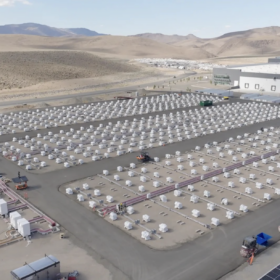
Second-life EV batteries approved for data center microgrid expansion
Crusoe and Redwood Energy are scaling a microgrid in Sparks, Nevada, by using repurposed electric vehicle batteries and solar to supply additional modular data centers.
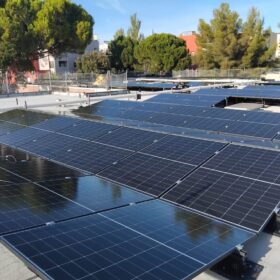
France lowers PV feed-in tariffs for systems up to 100 kW
France’s energy regulator has reduced feed-in tariffs (FITs) for PV systems up to 100 kW for the April to July 2026 period, with lower rates across all segments and reduced compensation for surplus electricity.

Spain enables 50-plus renewable plants for real-time voltage control
Spain’s grid operator Red Eléctrica and regulator CNMC have launched real-time voltage control services, allowing renewable energy installations to provide dynamic grid support under a new regulatory framework.

Global PV equipment market to reach 2.6 times current size by 2035
A new study by Germany’s mechanical engineering association (VDMA) finds global capital expenditure on PV manufacturing equipment will grow to more than 2.5 times current levels by 2035, with European suppliers retaining competitive strengths for now despite structural challenges.
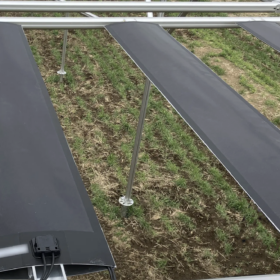
Sekisui-led consortium testing film-type perovskite solar for agrivolatics
A Japanese consortium is piloting agrivoltaics using film-type perovskite solar cells over rice paddies to study energy generation alongside crop production. The three-year project will assess impacts on rice yield, land use, and emissions while testing the technology’s performance and commercial viability.

How many solar projects have been backed by the UK government?
Clean energy projects data reveals projects that have secured some kind of government backing since the last general election in July 2024. The largest projects are backed through contracts-for-difference allocation rounds, while rooftop support has been ramping up on schools and hospitals.
