
Thornova offers solar module composite frames
Chinese manufacturer Thornova says that its new composite frames offers advantages in terms of stability, corrosion, and chemical resistance. Installation is also easier because no grounding is required.

UK grid connections reform approved to ‘axe zombie projects’, fast-track 65 GW solar deployment
UK energy regulator Ofgem has approved connection queue reforms for Great Britain’s electricity grid. The change could see 65 GW of solar projects enter the fast-track “Gate 2” connections queue. The government claims reform will accelerate renewables and energy storage deployment while unlocking GBP 40 billion ($53 billion) of investment in clean energy and infrastructure.
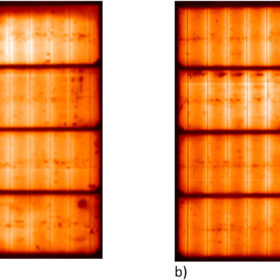
CEA-INES unveils PV module interconnection tech that reduces silver use by 26%
The French research institute found that switching from silver cell metallization to silver-copper metallization can lower the total silver quantity in a heterojunction module, with a total silver amount of only 14 mgAg/W being required. Their interconnection technique is based on low silver content electrically conductive adhesives and copper ribbons.

U.S. researchers developing photovoltaic dual-axis canopy
The “morphing skin” would track sunlight and have the flexibility and surface area to wrap across large surfaces, such as buildings and stadiums.

TrinaStorage launches Elementa 3 utility-scale battery storage system
The new utility-scale battery energy storage features 565 Ah cells and delivers a rated capacity of 6.017 MWh with a typical discharge duration of four hours.

EcoFlow launches balcony PV system, batteries with AI features
EcoFlow’s new Stream series, its second-gen balcony solar plant, enables battery coordination and plug-and-play solar for distributed batteries, plus third-party microinverter coordination for its new battery.
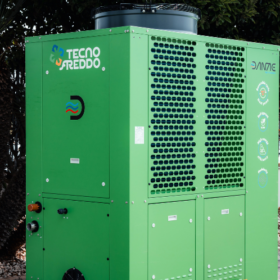
Frascold, Tecnofreddo present high-temperature propane heat pump
Conceived for industrial applications, the Danae heat pump system is available in 10 versions with cooling capacities ranging from 22.1 kW to 156.9 kW and heating capacities spanning from 24.8 kW and 181.6 kW.

Japan’s NEDO opens fiscal 2025 funding round for solar tech innovation
Japan’s national energy R&D agency has launched a five-year R&D program to accelerate solar innovation. The fiscal 2025 call for proposals seeks advances in high-efficiency cells, site-specific systems, PV module recycling, and long-term power stability.
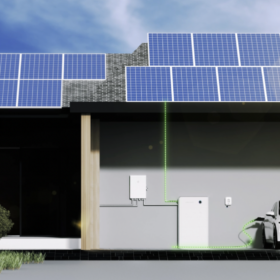
Australian entities say V2G tech ready for market
Essential Energy, the Commonwealth Scientific and Industrial Research Organisation (CSIRO), renewable tech company Sigenergy and electric vehicle distributor AUSEV have jointly announced vehicle-to-grid (V2G) technology is market ready in Australia.
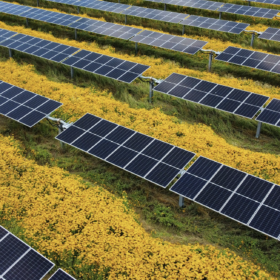
Acoustics for solar harmony
Fixing a project’s acoustics can be costly and difficult, but easily avoided if considered early in the project’s development.
