
New passive solar module cooling tech based on lightweight hydrogel
Researchers at Thailand’s Vidyasirimedhi Institute of Science and Technology demonstrated a novel hydrogel that has high cooling effect on silicon PV panels. The lightweight technology purportedly enables a temperature drop of 23 C, from 70 to 47 C, and a relative 12.3% power conversion efficiency increase.
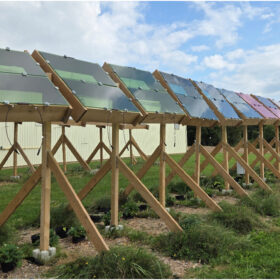
Cadmium telluride vs. crystalline silicon in agrivoltaics
Researchers in Canada have compared strawberry growth under uniform illumination from semi-transparent thin-film cadmium telluride panels and non-uniform illumination from semi-transparent crystalline silicon modules. Their analysis considered metrics such as fresh weight, height, leaf count, chlorophyll content, soil temperature and humidity.
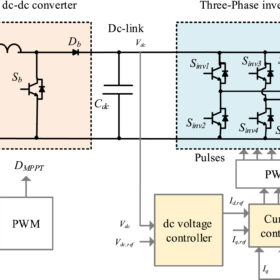
Dual-component controller for three-phase solar inverters can reduce overshoot to less than 0.33%
An international research team has conceived a dual-component controller for three-phase inverters that can reportedly achieve faster settling times, reduced overshoot and more stable current tracking compared to conventional controllers.

Thermocold launches new air-to-water heat pumps
The Italian manufacturer said its new heat pumps use R454B as a refrigerant and have coefficient of performance of up to 3.35.
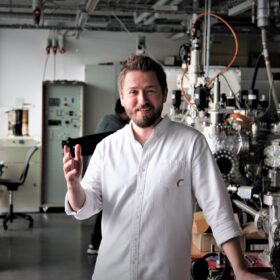
Transparent tandem solar cell hits record 12.3% efficiency
A global research team has developed a tandem solar cell with 30% transparency by combining perovskite and organic layers, achieving a record 12.3% efficiency for transparent solar cells.
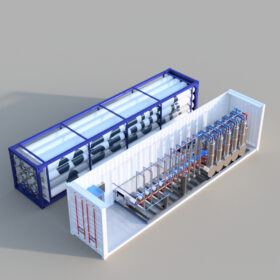
Compressed air energy storage system for homes, businesses
Segula Technologies has launched its Remora Stack product, a containerized isothermal air compression storage solution the company claims is 70% efficient.

Exploring hydrogen for energy development in remote communities: Comparing Canadian and Malaysian prospects
Researchers at the University of Waterloo in Canada investigated hydrogen as a potential decarbonization strategy for remote communities in Canada and Malaysia. They reviewed the two countries’ respective situations before presenting a value proposition for continued work – both separately and collaboratively.

Field survey protocol for monitoring PV backsheet degradation
A research group including scientists from U.S. National Institute of Standards and Technology (NIST), Underwriter’s Laboratories Inc., and the National Renewable Energy Laboratory (NREL) has outlined a new protocol for assessing PV module backsheet degradation in the field. Through the proposed framework, the researchers analyzed PV backsheet degradation across 41 sites, with exposure times ranging from 1 to 38 years.
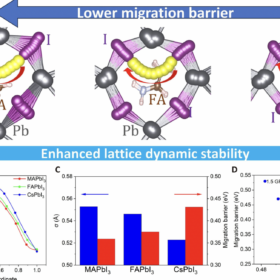
Australian researchers advance halide perovskite cell stabilization
University of Sydney researchers have suppressed ion migration at the B-site in halide perovskites, reducing energy loss and improving solar cell stability and performance reliability.

UK researchers build two-electrode photoelectrochemical device with 5% solar-to-hydrogen efficiency
A research team from two London universities have developed a multi-layer device that addresses the instability of organic materials in water to further their use in direct solar hydrogen generation. Monolithic tandem anodes fabricated by the team reached a solar-to-hydrogen efficiency of 5%, a record in organic photoelectrochemical device performance.
