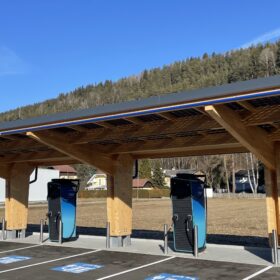
Timber PV canopy for EV charging station in Austria
Norway’s Mer Group has installed a pilot EV charging station with a timber canopy in Spittal an der Drau, Austria, in collaboration with local partners.
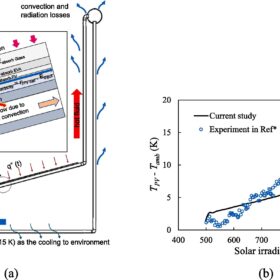
Scientists develop thermal model for floating solar with 15.45% efficiency
Scientists have developed a multi-physics thermal model for panels with a natural convection cooling loop and tested it against experimental data. They have also experimented with varying the coolant channel thickness and different coolants. The highest measured electrical efficiency reached 15.45%.
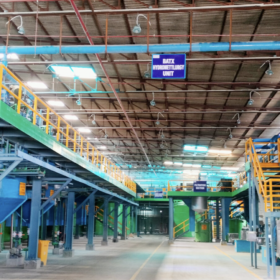
BatX Energies opens lithium battery recycling plant in India
BatX Energies says it has opened a lithium battery recycling facility in India to extract critical materials using a hydrometallurgical process.
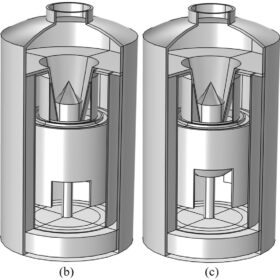
New tech to reduce oxygen defects in Czochralski wafers
Research from the Chin-Yi University of Technology in Taiwan revealed a novel heater design in the Czochralski silicon crystal growth process that can control and decrease oxygen concentration without incurring the costs associated with other methods, such as installing magnets or using alternative crucible materials.
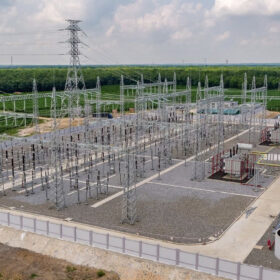
A tumultuous year for solar and batteries
In five key trends, pv magazine looks back over a year that saw PV module prices fall lower than many thought possible, while demand was restrained by grid congestion, among other challenges. Energy storage has had a strong year and geopolitics is seeing solar and battery manufacturing enter new regions as competition drives technical innovation.
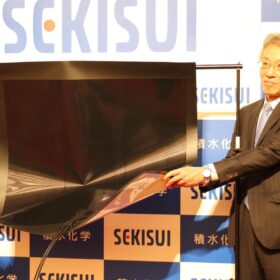
Sekisui Chemical invests in 100 MW perovskite solar production line
Japanese plastics manufacturer Sekisui Chemical is investing in a 100 MW production line to make lightweight perovskite solar panels for low load-bearing rooftops, with an operational start in 2027. It will also acquire a production facility from Japanese electronics manufacturer Sharp.
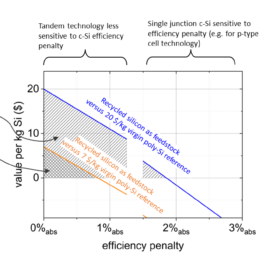
Prospects for reusing silicon from end-of-life solar modules in new ingot production
Scientists in the Netherlands proposed a new testing scheme for recycling silicon from end-of-life photovoltaic panels. Their methodology helped create different wafer categories for recycling silicon for new ingot production but also showed that most of recycled silicon in the near future will come from p-type products, which will harldy be reutilized in a market now dominated by n-type modules.

Unpacking solar-project data analytics
The PV industry is embracing artificial intelligence and machine learning (ML) techniques to automate operations and maintenance (O&M) diagnostics and predictive analytics in PV systems. More transparency and standard definitions are needed, however, as US-based Sandia Labs scientists Joshua Stein and Marios Theristis explain.
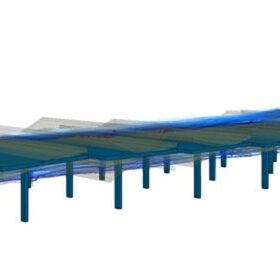
Researchers create framework to optimize solar panel tilt in extreme winds
Researchers in France have proposed a numerical decision-making framework to determine solar panel tilt angle optimization in extreme winds. They say the framework challenges traditional engineering practices and offers a scalable solution for enhancing real-world resilience.

Billing and services software for commercial solar rooftops
UK startup Volter has launched software to simplify revenue generation for owners of commercial and industrial (C&I) rooftop solar assets. It also supports installers and power purchase agreement (PPA) providers active in commercial rooftop solar markets.
