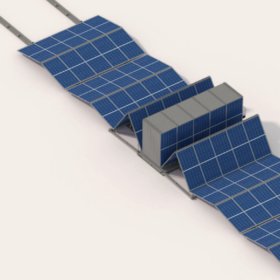
Austrian startup launches portable containerized PV system
Solarcont has developed a portable, containerized PV system featuring 240 solar modules on a folding system for easy removal and storage.
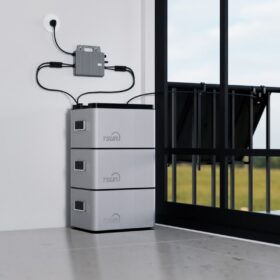
TSUN debuts DC-coupled 1,024 Wh battery
The Chinese manufacturer said its new residential storage system is an ideal solution for balcony PV system. The battery features a maximum input power of 1,200 W and a maximum output power of 800 W.
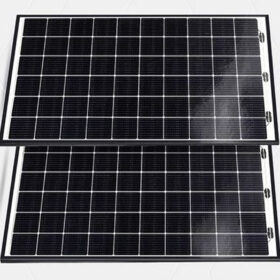
Solitek launches bifacial solar panels for carports
The Lithuanian module manufacturer has unveiled 37O W bifacial dual glass modules for carports featuring 3 mm glass on both sides and an anodized aluminum frame. The new products are certified as overhead glazing by the German Institute for Building Technology (DIBt), with a class 4 hail resistance and efficiency of 19.57%.
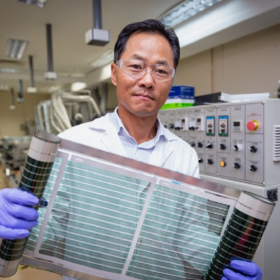
Researchers claim record efficiency for roll-to-roll fabricated perovskite PV cell
Researchers led by Australia’s Commonwealth Scientific and Industrial Research Organisation (CSIRO) recorded an 11% efficiency on 50 cm² large-scale solar panels consisting of optimized roll-to-roll fabricated hybrid perovskite solar cells.
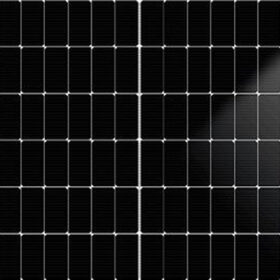
DAH Solar unveils frameless double-glass TOPCon panels
Chinese manufacturer DAH Solar says its new double-glass panels have a power conversion efficiency of 22.65% and a power output of up to 585 W.

Atlantic blast hits European solar production
In a new weekly update for pv magazine, Solcast, a DNV company, reports that irradiance and PV production was more than 15% below normal during February across most of Europe, due to thick clouds in moist westerly winds from the Atlantic.
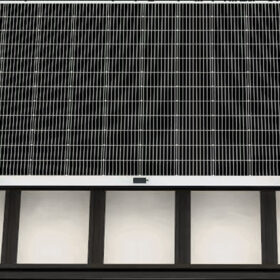
Sunman unveils 520 W glass-free solar panel with 19.3% efficiency
The new panel has a white backsheet and a temperature coefficient of -0.34/C. It weighs 4.1 kg per m2 and, according to the manufacturer, supports all types of installation methods, including roof adhesive and removal mechanical mounting.
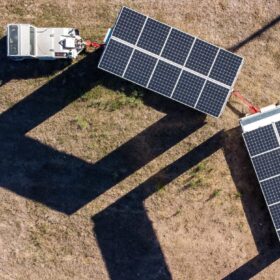
Vehicle-integrated photovoltaics for electric ground transport
Canadian custom module manufacturer Capsolar developed a vehicle integrated PV system (VIPV) for an electric material towing application, reportedly enabling 30% to 40% range increase per battery charge.
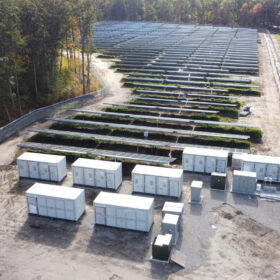
Bulgaria launches renewables-plus-storage tenders
Bulgarian businesses can apply for funding under two new tenders that aim to facilitate 1,425 MW of renewable energy generation capacity coupled with 350 MW of energy storage. Funding support is only offered for the storage component.
European consortium targets end-of-life PV panel silicon recycling
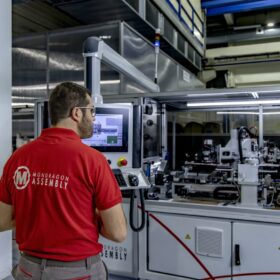
A European consortium of 11 commercial and non-profit organizations is developing several technologies to make use of end-of-life PV panels by either re-deploying them or by recovering and reprocessing the silicon.
