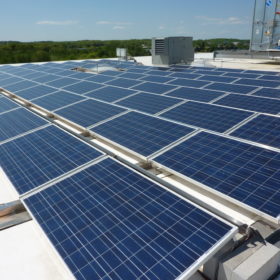
AC vs. DC in residential buildings equipped with solar-plus-storage
Scientists in Sweden have compared AC and DC topologies in PV-powered buildings using battery storage. They have found that DC distribution systems can achieve energy savings when they are combined with solar-plus-storage systems.
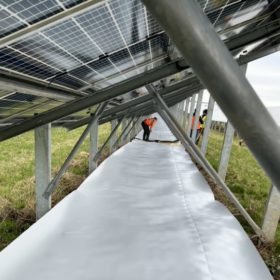
Reflective membrane to increase albedo, power yield in bifacial PV projects
Germany-based Solmax has developed a reflective membrane made of polyethylene resins and coated with a thin white polyethylene layer that reflects ultraviolet (UV) rays. The company claims the membrane can increase the energy yield of a bifacial PV project by between 5% and 20%, depending on the plant configuration.
DNV acquires Australia’s Solcast
Norway’s DNV has acquired Australia-based solar data specialist Solcast for an unspecified sum.
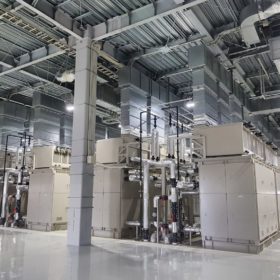
Overcoming thermal issues of vanadium redox flow batteries
Chinese scientists have analyzed reports of thermal issues with vanadium redox flow batteries (VRFB) and existing thermal management methods. They say the operating temperature should be maintained in the range of 10 C to 40 C to ensure VRFBs with high efficiency, weak side reactions, high electrolyte stability, and low crossover.
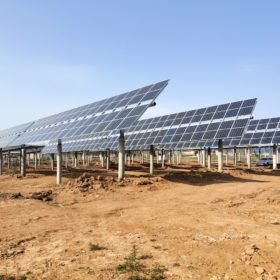
Big wafer benefits extend to n-type, says Trina Solar
China’s Trina Solar has published a white paper on its latest n-type TOPCon modules, with cost calculations and figures from demonstration projects. The Chinese PV manufacturer claims better performance from its 210 mm cells than with other n-type products based on smaller, 182 mm cells.
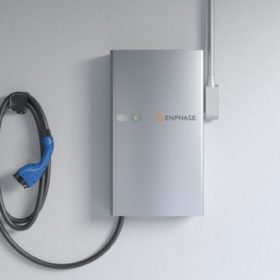
Enphase demonstrates bidirectional EV charger
Enphase’s new bidirectional EV charger enables vehicle-to-home and vehicle-to-grid applications, and can be integrated with its home energy systems.

Inverted perovskite solar cell with 24.1% efficiency
An international research group has developed an inverted perovskite solar cell with an active area of 9.6 mm2 by using polymer dipoles for interfacial engineering. It retained 96% of its initial power conversion efficiency after continuous maximum power point (MPP) tracking for 1,000 hours.

Only5mins! – Monetizing energy storage
Storage Hub founder Oliver Schmidt speaks with pv magazine about his outlook for battery energy storage pricing and the cost trajectory of electrolyzers. Schmidt’s new book, “Monetizing Energy Storage – A toolkit to assess future cost and value,” will be published by Oxford University Press in June.
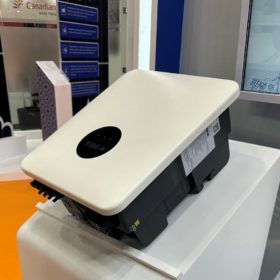
TBEA unveils new residential inverters
TBEA has developed new products with nominal power ratings of 10 kW to 25 kW and efficiencies of 98.5%.
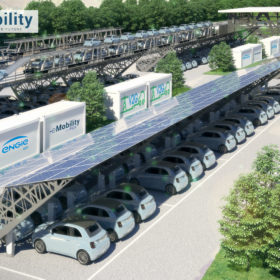
EV batteries alone could satisfy short-term grid storage demand
Low participation rates for vehicle-to-grid (V2G) tech of just 12% to 43% are needed to provide short-term grid storage demand throughout the world by as early as 2030, according to a group of Dutch and US researchers.
