
Chinese manufacturer plans solar glass factory in Algeria
China’s Kibing Group is looking to develop a solar glass manufacturing facility in Algeria with an annual production capacity of 1.53 million tonnes.
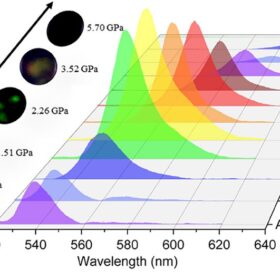
Finetuning 2D Dion-Jacobson perovskites for photovoltaic applications
Canadian and U.S. researchers have investigated applying pressure to a 2D hybrid organic-inorganic perovskite to tune the optical and electronic properties to suit photovoltaic applications, light emitting diodes or other semiconductor devices.
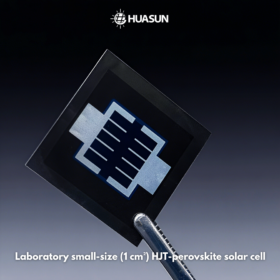
Huasun achieves 34.02% efficiency for perovskite-heterojunction solar cell
The Chinese manufacturer said the result was achieved thanks to new perovskite crystallization additives and high-mobility carrier transport layer materials.

New deep learning tech for PV inverter fault diagnosis
A team of scientists in the United States has combined both spatial and temporal attention mechanisms to develop a new approach for PV inverter fault detection. Training the new method on a dataset created in MATLAB/Simulink, the group has compared it to a series of other data-driven and statistical-based methods and has found accuracy reached 97.35%.

UK study finds space-based solar could supply 80% of Europe’s renewable energy needs
A paper by King’s College London scientists suggests that space-based solar panels (SBSP) could cut Europe’s land-based renewable energy needs by up to 80%, including reducing battery energy storage usage by more than 70%. The authors are now in contact with leading companies such as Space Solar.
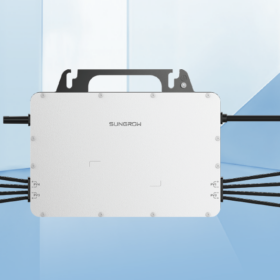
Sungrow debuts 2.5 kW microinverter
The Chinese company said its new microinverter supports four independent MPPT inputs with DC input currents up to 18 A.
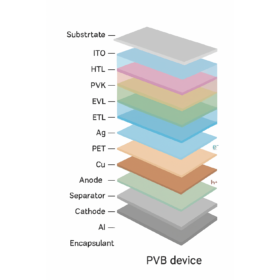
All-perovskite PV-powered battery for portable electronics
Scientists have used a dual-functional, material-sharing strategy with ethyl viologen diiodide to achieve synergistic performance enhancement in PV-powered batteries. The system was reportedly able to power a wearable glucose monitor for 24 hours.

How to measure solar cell vibrations in vehicle-integrated photovoltaics
Researchers at the University of Miyazaki in Japan used a new non-destructive method to enable them to investigate solar cell vibrations independently of module components. The study included potential design features for resonance-resistant vehicle integrated PV modules that would increase the natural resonance frequency to above 2,000 Hz.

Euronergy launches new lightweight PV module series
The Dutch company said the new products have a power output ranging from 410 W to 430 W in power and an efficiency of up to 22.2%. The panels reportedly weigh 30% less than conventional counterparts.

Renshine Solar hits 27.5% efficiency for flexible all-perovskite solar cell
Renshine Solar says it has achieved a record 27.5% efficiency for a flexible all-perovskite cell and 23.0% on a 20.26 cm² panel.
