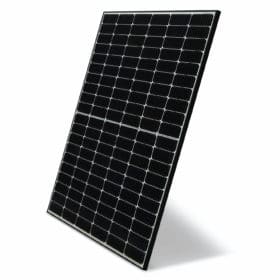
LG unveils 390 W n-type module
The Korean manufacturer said the NeON H solar panel is the most reliable and efficient renewable energy solution it has ever created. The new product features an efficiency of 21.2% and a temperature coefficient of -0.33% per degree Celsius,
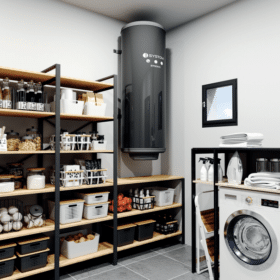
Solar water heater to maximize self-consumption
French module manufacturer Systovi has developed a smart water heater that can forecast the weather, store surplus green electricity, and return it in the form of hot water, according to household needs.
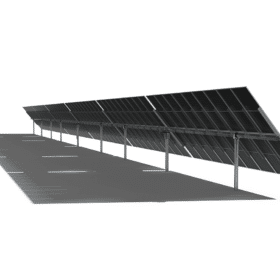
PVH launches tracker for high-power modules
The new solar tracker from PVH was specifically designed to be compatible with large-format modules and was developed in static and aeroelastic wind tunnels.
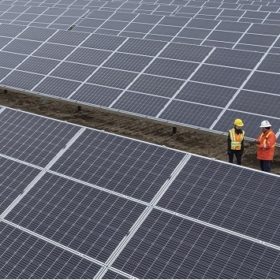
Using optical film to concentrate light in large-scale PV
The approach taken at a 13.7 MW Canadian solar park redirects and concentrates otherwise discarded light onto the PV cells.
A long-lasting aluminum battery
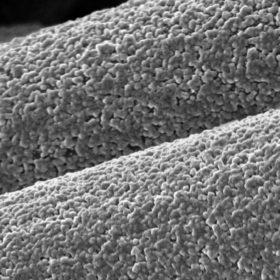
Scientists in the U.S. developed an aluminum battery that demonstrates better than 99.5% reversibility, and could offer “up to 10,000 error-free cycles”. By incorporating a substrate of carbon fibers into the anode design, the group gained better control over chemical bonds that form as the battery charges, leading to greatly improved performance.
Cooling PV modules with radiative sky cooling
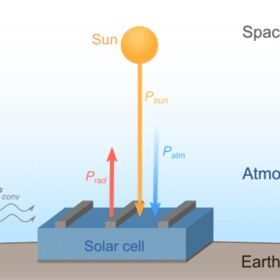
French scientists have proposed the use of radiative sky cooling as a passive cooling technique to cut PV module temperatures by 10 C. They claim the method could improve performance by more than 5 W/m2.
UNIST, EPFL claim 25.6% efficiency world record for perovskite solar cell
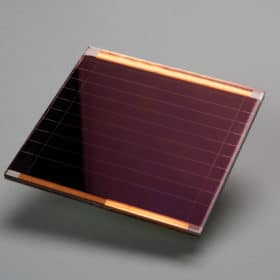
Scientists have set a new efficiency record for a single-junction perovskite solar cell at 25.6%. The cell additionally showed operational stability for 450 hours, and intense electroluminescence with external quantum efficiencies of more than 10%.
The Hydrogen Stream: Projects move forward in China, Japan, Australia and across several European countries
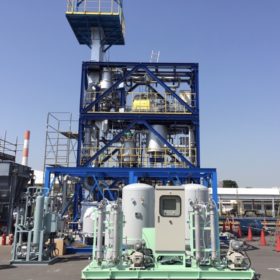
Sinopec wants to build 1,000 hydrogen refueling stations by 2025. Ways2H is building a facility in the Tokyo area that will convert daily 1 ton of dried sewage sludge into 40-50 kilograms of hydrogen for fuel cell mobility and power generation. Ørsted wants to deploy two renewable hydrogen production facilities for a total of 1 GW by 2030. Wacker Chemie is planning to produce green hydrogen and renewable methanol at its German site.

New design for antireflective coating in multijunction solar cells
Scientists in Madrid investigated the use of antireflective coatings in multijunction solar cells, drawing several conclusions that could further improve the efficiency of these cells. Their approach could improve on current antireflective coatings, particularly for high-efficiency multijunction cells, using methods and materials already proven in mass production.

Monograin layer solar cell with 6.4% efficiency
The lightweight and flexible cell was built by Estonian researchers with microcrystalline powders. The device is claimed to be the most efficient solar cell fabricated with a semiconductor compound known as Cu2CdGe(SxSe1−x)4.
