
New method to optimize bifacial PV system performance in residential applications
Scientists in Qatar have outlined a new approach to optimize residential bifacial PV systems by combining south-facing and vertically mounted east-facing configurations. The novel methodology reportedly results in a 21.6% increase in a system’s net present value.
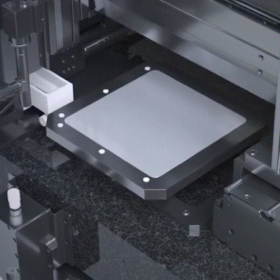
Gosan Tech launching inkjet systems for perovskite solar cells
The South Korean inkjet technology company is expanding to provide inkjet printing systems for perovskite solar photovoltaic manufacturing. An investment by a corporate venture fund backed by Japan’s Epson Group is expected to help it expand the business and widen the applications of its industrial inkjet technology.

Researchers warn of ‘hidden contaminants’ that could increase TOPCon, HJT solar module degradation
Australian researchers have identified five contaminants that could increase damp heat-induced degradation in TOPCon and heterojunction cells and modules. Their analysis has shown these contaminants could originate from improper handling during cell or module processing.
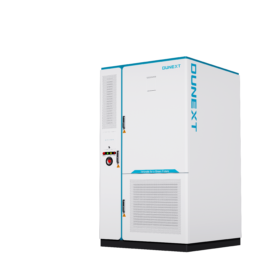
Dunext introduces outdoor energy storage cabinet
The Chinese company said its new product is intended for commercial and industrial use. It uses 233 kWh LiFePO4 batteries.

Amelia Hub unveils all-in-one solution for pile-driving and tracker installation
The Spanish company has launched the Hincator, a device that precisely measures key pile parameters, and Amelia Solar, a cloud platform that processes data in real time, to ensure pile-driving and trackers in PV plants are installed correctly and within project tolerances.
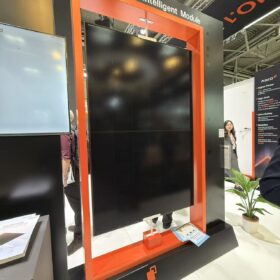
Aiko unveils back-contact solar module with ‘fully intelligent integration’
Chinese solar cell and module maker Aiko presented its new intelligent solar module series, Navigator, at this year’s Intersolar. Based on the company’s N-type, all-back-contact (ABC) technology, Navigator promises a 3% to 5% boost in annual energy yield and lower operating costs.

Eturnity adds more PV design automation, energy system project control to its software
Additional project management and design automation tools are available on the Swiss software company’s subscription-based platform made for small and medium-sized (SME) businesses that are targeting commercial and industrial (C&I) and residential the solar PV segments.

FuturaSun, TNO sign bifacial solar cell collaboration
FuturaSun and The Netherlands Organization for Applied Scientific Research will work together on advancing the design of bifacial n-type silicon solar cells, with the technology to be integrated into FuturaSun’s Silk Nova solar modules.

TCL SunPower launches back contact solar modules
The SunPower M Class product portfolio offers solar panels for the residential and commercial markets featuring the company’s latest back contact solar technology. The panels are expected to reach 25% efficiency for residential applications up to 500 W and 24.4% for commercial applications up to 660 W.
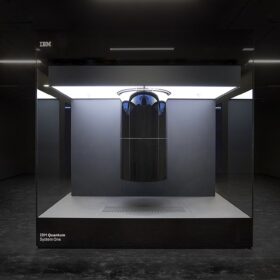
Quantum-based energy management method for PV-powered buildings
Scientists from Cornell University combined quantum computing with model predictive control to manage the energy of two PV-equipped university buildings. Compared to deterministic approaches, the quantum strategy achieved a 6.8% improvement in energy efficiency and an annual reduction of 41.2% in carbon emissions.
