
IFC loans $125 million for polysilicon factory in Malaysia
The International Finance Corporation is providing an A Loan to Malaysian polysilicon producer OCI TerraSus that will partly finance the development of a semiconductor-grade polysilicon production facility in Sarawak, Borneo.

How perovskite solar cells age under temperature stress
German and Swedish researchers have found that rapid temperature cycling degrades perovskite cell performance through thermally induced stress and phase transitions, while also identifying organic spacer molecules that can enhance structural stability.

US startup begins manufacturing grid-scale flywheel ESS
SOSV-backed Qnetic is aiming to raise $20 million in 2026. Over the next two years it will work with the National Lab of the Rockies and other partners on field testing and validating its technology across multiple use cases.
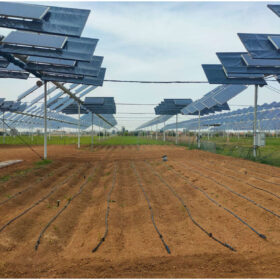
Multi-year field study finds that agrivoltaics can support healthy potato yields
Multi-year field trials conducted in Italy show that agrivoltaic systems can support healthy potato yields without major losses. Strategic shading and dynamic light management during critical growth stages proved key to maintaining productivity.
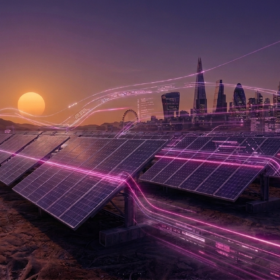
UK defining stronger energy cybersecurity rules after Poland attack
The UK government is proposing stronger cybersecurity rules for electricity and gas sectors, prompted by recent attacks on European energy infrastructure, including a recent incident involving solar power plants in Poland. The plans would extend baseline cybersecurity requirements to all licensed energy organizations and could also adjust compliance thresholds under NIS regulations.

Adani Green commissions 951 MW solar, hybrid capacity in India
Adani Green Energy Ltd. (AGEL) has commissioned 926 MW of solar and 25 MW of hybrid capacity across western India.
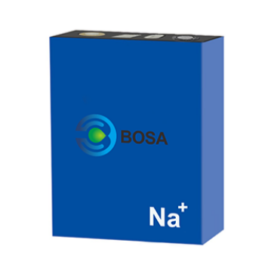
Sodium-ion cells launched for energy storage by another Chinese mid-tier battery company
Bosa Energy in Hubei, China, has launched sodium-ions cells for stationary energy storage, with a volumetric energy density of 206 Wh/L

Lithuania’s solar capacity surpasses 3 GW
Lithuania added approximately 600 MW of solar last year, taking total capacity to 3,040 MW. Technical permits have been issued for an additional 4 GW of solar but with grid congestion becoming a primary constraint, future deployments will be increasingly dependent on integration with storage technologies.

PV, storage to anchor Ireland’s first co-located data center campus
Due for completion in 2028, the DUB20 data center campus in County Wicklow will feature battery energy storage and solar PV installations capable of generating 6,000 MWh annually. It will be Ireland’s first Green Energy Park, delivered as part of its large energy users action plan (LEAP).

Portable data centers target curtailment, grid constraints
Australian startup WinDC has partnered with US-based Armada to deploy modular data centers at renewable energy sites, aiming to reduce curtailment and meet rising demand for energy-intensive computing infrastructure.
