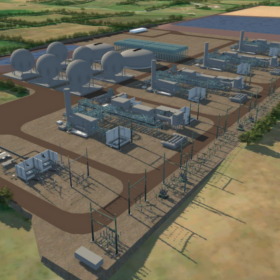
Hydrostor launches 4 GWh advanced compressed air energy storage project in Ontario
The first 4 GWh phase of the Canadian developer’s Quinte Energy Storage Centre is expected to be operational in the early 2030s, with subsequent phases targeting 8 GWh to 16 GWh.
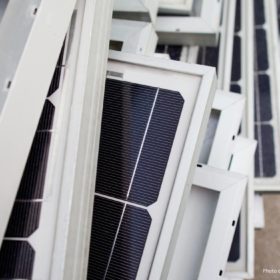
Upcycling silicon from end-of-life solar modules via palladium nanoparticles
Researchers in Italy have developed a Pd/Si catalyst for upcycling silicon from end-of-life PV panels. The system showed performance comparable to commercial-silicon catalysts and stable recycling over six cycles.
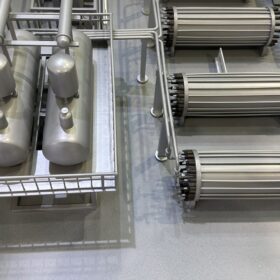
Spain, Denmark could develop European green hydrogen corridor for €2/kg by combining solar and offshore wind
The complementarity between Spanish photovoltaics and Danish offshore wind power could underpin a European green hydrogen market by enabling renewable hydrogen production and exports at costs close to €2/kg.
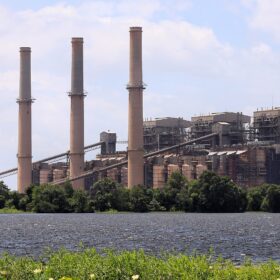
PV power generation to surpass coal in Texas
Utility-scale solar power is projected to surpass coal-fired generation in the ERCOT grid this year as massive capacity additions continue to reshape the state energy mix.
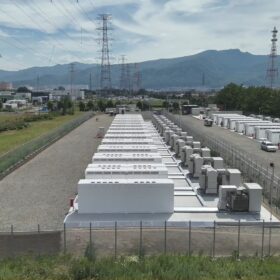
Japan awards 1.25 GW of battery storage in capacity market auction
Third long-term decarbonization auction sees significant drop in BESS bids due to new rule on storage duration. However, awarded capacity for battery storage remained relatively strong.
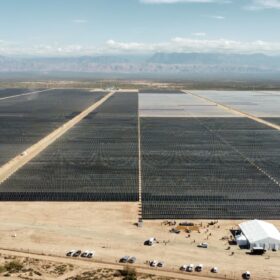
Argentina commissions 360 MW solar farm
The $220 million project has a capacity of 305 MW and is located in the province of Mendoza, in the sunny Cuyo region.
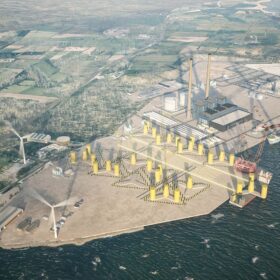
The Hydrogen Stream: Ireland’s LCOH on par with Morocco, Brazil
Fraunhofer ISE, in collaboration with Irishi energy company ESB, developed a methodology showing that Ireland is a competitive location for renewable power-to-X and green hydrogen production with costs comparable to Morocco, South Africa, and Brazil, supported by strong wind resources, policy backing, and infrastructure potential.

Women’s leadership is everywhere in Ukraine
This week Women in Solar+ Europe gives voice to Yuliana Onishchuk, founder and CEO of the Charitable organisation Energy Act for Ukraine Foundation. She explains how Russia’s full-scale invasion transformed solar energy in Ukraine from a green technology into a vital tool for survival, powering hospitals, schools, and communities during blackouts and attacks. Through the Energy Act for Ukraine Foundation, decentralized renewable energy and women-led initiatives are helping build resilience, protect critical infrastructure, and shape a more secure and sustainable future for Ukraine.
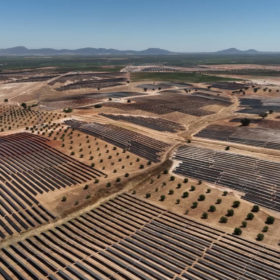
Solar PPAs raise Spanish spot prices, not suppress them
A new peer-reviewed study of Spain’s electricity market shows that physical bilateral contracts (PBC) from wind and solar increase wholesale power prices during high-penetration phases, reversing their price-suppressing effect during earlier periods.
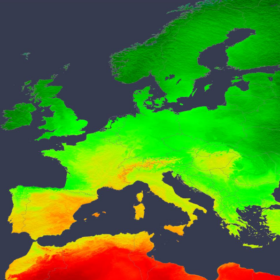
Blocking pattern lifts irradiance from France to Finland while storms hit the east
In a new weekly update for pv magazine, Solcast, a DNV company, reports that a persistent high-pressure system over the North Sea created a major April solar irradiance surplus across western and northern Europe by suppressing clouds and boosting GHI well above average. At the same time, displaced storm tracks reduced irradiance in the eastern Mediterranean and parts of Eastern Europe, producing deficits in Greece, Turkey, and Ukraine while maintaining a sharp west–east contrast.
