
Improving PV cleaning schedules without large datasets
Scientists in Algeria have developed a low-cost solution to optimize cleaning operations for all PV systems. The proposed approach works “effectively” without heavy data requirements, according to its creators.

Solaires Entreprises ships indoor perovskite PV modules to first customer
Solaires Entreprises, a Canadian perovskite startup, has begun supplying indoor PV modules for integration into sensor devices, marking its first commercial shipment.
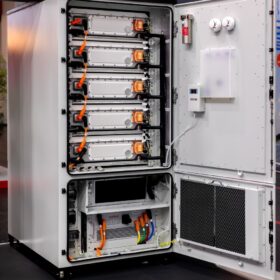
GoodWe launches 125 kW/261 kWh all-in-one C&I battery
GoodWe has introduced a 125 kW/261 kWh all-in-one battery for commercial and industrial use in China, with applications spanning factories, farms, EV charging stations, commercial sites, and grid or off-grid systems.
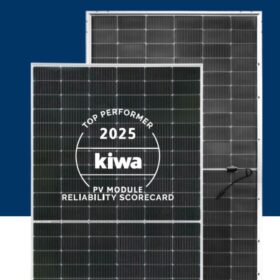
Premier Energies launches 620 W TOPCon solar module
Premier Energies has started commercial output at its 1.2 GW n-type G12R solar cell line in India and introduced a 620 W bifacial module with n-type tunnel oxide passivated contact (TOPCon) cells based on the rectangular G12R wafer format.

Sunniest state in US turns its back on the sun
Arizona holds a Guinness World Record for “most sunshine” and holds no significant gas reserves. However, despite hundreds of objections, its commission voted to repeal its renewable energy standard, letting its utilities take the wheel and head back toward more gas.
The Hydrogen Stream: NGV to install 100% hydrogen-fueled linear generator
National Grid Ventures (NGV) will test the world’s first 100% hydrogen-fueled linear generator at its Northport plant for 12 months, supported by $11 million in New York State funding.

Chinese PV Industry Brief: Maxeon posts H1 net loss as US import ban hits sales
Maxeon Solar Technologies says its net loss widened to $65.5 million in the first half of 2025, while Power Construction Corp. of China launched a tender for 60 GW of fixed PV mounting systems for 2025-27.
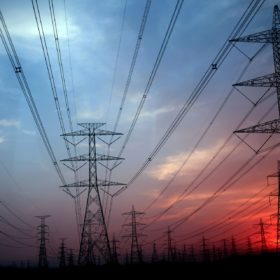
Ireland curtails almost 89 GWh of solar in H1
Commenting on its report on Ireland and Great British renewable energy curtailment, Montel Energy’s Fintan Devenney described Great Britain’s solar curtailment as “negligible” during the first six months of 2025. Solar curtailment in Ireland has increased sevenfold since 2022, the report found.

Zambia begins building 100 MW solar project
Zambia has started construction of the 100 MW Chipata West solar project, as part of the country’s target to reach 1 GW of utility-scale solar capacity.

Sumitomo Heavy unveils reactive plasma tech for thin-film perovskite PV
Sumitomo Heavy Industries (SHI) has developed a new reactive plasma deposition (RPD) method to form ultra-thin tin oxide electron transport layers (ETL) for perovskite solar cells. It claims this enables low-temperature mass production with minimal substrate damage.
