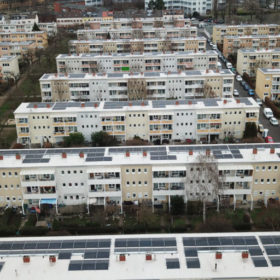
Germany deployed 447 MW in July
According to the latest figures from the Federal Network Agency, the country’s cumulative installed PV power has now reached 51.98 GW.
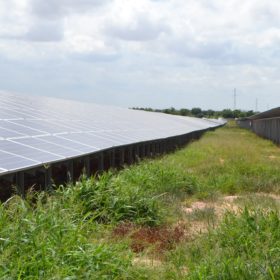
Burkina Faso launches tender for 9 MW of solar
National utility Sonabel plans to build four solar projects in the towns of Dori, Diapaga and Gaoua. Interested developers have until Oct. 5 to submit their proposals.
South Africa kicks off 2 GW tech-neutral tender to improve power supply
The South African Department of Mineral Resources and Energy (DMRE) is requesting proposals for the Risk Mitigation Independent Power Producers Procurement Programme (RMIPPPP). The tender is intended to procure 2 GW of capacity in response to the chronic short-term electricity supply gap that is affecting the country and its mining sector. Renewables are also entitled to compete.
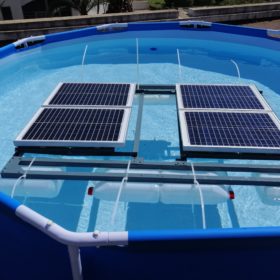
Test bench compares floating PV with onshore solar arrays
Moroccan researchers have set up a new floating PV test bench. They claim floating solar arrays offer better power yields than rooftop and ground-mounted PV systems, with lower module operating temperatures.
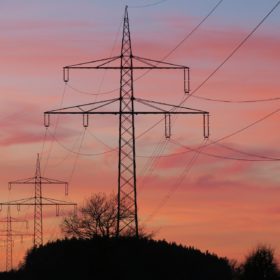
Renewables improve reliability outlook for Australia’s main grid
Australia’s power supply has improved, as new solar and wind capacity are making summer blackouts less likely, says the Australian Energy Market Operator. Timely commissioning of new generation, storage and transmission investment will be critical, given the nation’s aging coal fleet and looming plant closures.

India can’t match Gulf region’s record-low PV tariffs
India’s solar tariffs are some of the lowest in the world, but they’re almost double the Gulf region’s tariffs.
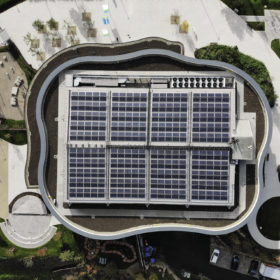
The weekend read: Hydrogen and the energy transition
Researchers are now simulating how the energy transition can be as successful and cost-effective as possible. As part of the simulation, they are also calculating how much hydrogen will be needed and where it could come from. In Germany, a recent study by Fraunhofer ISE showed that the cost is so low that the nation could gift itself the energy transition as a Christmas present.
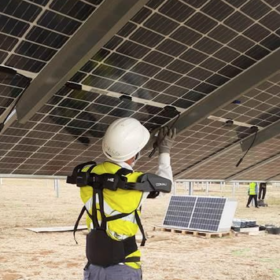
Exoskeletons for solar panel mounting
Endesa, the Spanish unit of Italian power group Enel, is using a new technology in the construction of three solar parks in southern Spain.
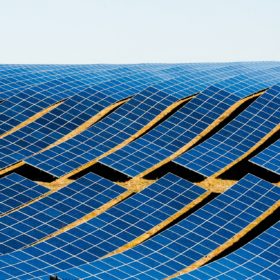
Indian developers demand deferral of customs duty on PV panels
India’s Solar Power Developers Association said that the one-year safeguard duty extension has already driven up capital costs. Any additional tariff barriers would jeopardize the Indian government’s “100 GW by 2022” target, it claimed.
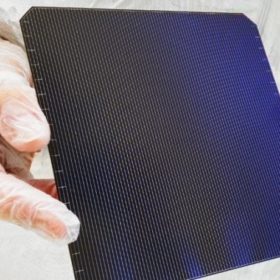
Enel and French PV institute achieved an efficiency of 25.0% for a heterojunction solar cell
The solar cell calibration laboratory ISFH CalTeC has certified the efficiency of the cell, which was made with a standard M2 wafer.
