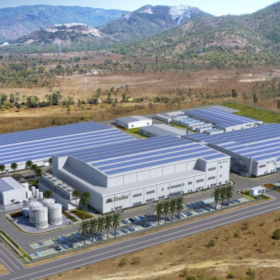
Australia fast-tracks solar ingot, wafer plant with ‘major project’ status
Plans to build Australia’s first large-scale silicon ingot and wafer manufacturing facility in Queensland have been put on the fast track by the federal government in a nod to the project’s potential to play a key role in supporting a domestic solar supply chain.
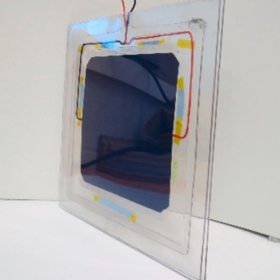
First attempt to build solar modules using polycarbonate encapsulant
Canadian researchers proposed a laminate-free solar module using polycarbonate instead of EVA and glass. The new encapsulation technique reportedly enables easy disassembly, reuse of solar cells, and open-source local manufacturing.
Chemical incidents halt Silfab Solar factory as US probe begins
South Carolina regulators and the US Environmental Protection Agency (EPA) are investigating Silfab Solar’s Fort Mill manufacturing plant after releases of potassium hydroxide and hydrofluoric acid within the same week.
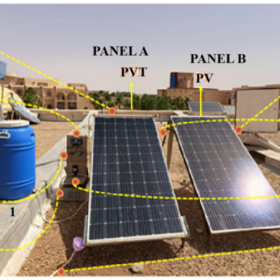
Water-spray cooling can improve PV module efficiency by 28% in arid environments
An Algerian research team has developed a smart water-spray cooling system for PV panels that activates only when temperatures exceed a set threshold, boosting efficiency while minimizing water use in desert conditions. The system raised power output and reduced module temperatures, offering similar efficiency to continuous cooling but with far lower water consumption, pump operation, and costs.
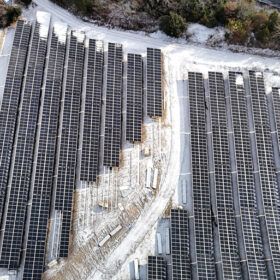
Japan’s 27th solar auction concludes with average final price of $0.029/kWh
Japan has allocated 79 MW of PV capacity in its latest procurement exercise. The lowest price in the auction was JPY 0/kWh.
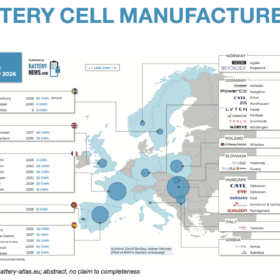
‘Battery Atlas 2026’ maps Europe’s cell, pack and battery manufacturers
The “Battery Atlas 2026” report shows consolidation in Europe’s battery market. More than 2,000 GWh of cell production capacity was announced in 2023, but the realistic forecast for early 2026 is around 1,190 GWh, including approximately 673 GWh led by Asian companies.
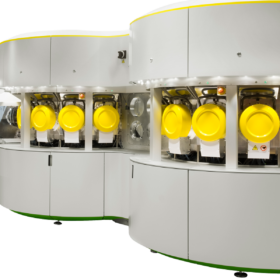
Midsummer secures second order for CIGS production line equipment
Swedish thin-film solar manufacturer Midsummer has secured its largest-ever order for production equipment, covering a complete solar cell factory. It follows an initial order in May 2025 for a 15 MW line producing thin-film copper, indium, gallium and selenide (CIGS) solar cells.
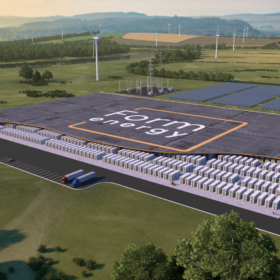
Small 24/7 clean power commitments could cut costs for long-duration storage
TU Berlin researchers say early demand for round-the-clock carbon-free electricity could help bring advanced energy technologies to market faster through technology learning effects. Grant funding for the research was provided by Google, which has since announced plans to build the world’s largest iron-air battery.

Thermocold debuts air-to-water heat pump for commercial buildings
The new product line covers 124–644 kW in heating and 128–632 kW in cooling, operates down to -15 C, and supports various configurations with R454B or R410a refrigerants.
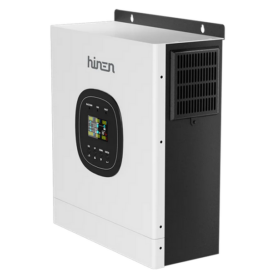
Hinen releases residential off-grid inverter
The 3 kW N3300S inverter combines a pure sine wave inverter with an integrated MPPT solar charge controller for small residential and hybrid PV systems. The unit supports multiple power sources, flexible battery chemistries, and rapid grid/off-grid switching.
