
British and Irish BESS investors make big moves in Japan
Gore Street Capital’s Japanese fund buys its first battery energy storage system (BESS) project, while Ireland’s GridBeyond begins energy trading in Japan with front-of-the-meter asset.
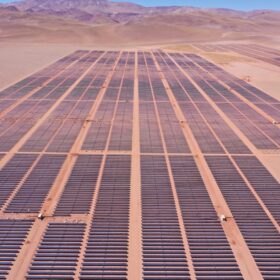
Argentina reaches nearly 2 GW of installed PV capacity
According to the latest monthly report for May, issued by CAMMESA, solar power reached 1,933 MW, representing 4.4% of the total. A total of 46 MW was commissioned in the month in question.

Solar records in UK and Germany as cold snap hits Eastern Europe
In a new weekly update for pv magazine, Solcast, a DNV company, reports that record irradiance in western Europe boosted solar output in May, while low pressure and Arctic air suppressed irradiance and temperatures in the east.

Wafer producers scramble to stay afloat despite hydropower advantage
In a new weekly update for pv magazine, OPIS, a Dow Jones company, reports that FOB China wafer prices remained stable this week amid weak demand and low production. It says manufacturers continue to face margin pressure despite seasonal hydropower cost relief and traceability documentation premiums.

French company offers router capable of redirecting surplus solar to water heating
French energy cooperative Solarcoop has launched a solar router that redirects surplus photovoltaic power from self-consumption systems to electric water heaters or other resistive loads, and can also control additional devices such as heat pumps.
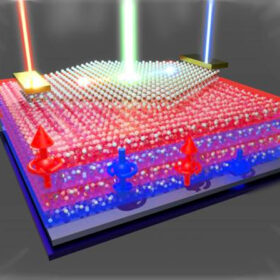
New device could pave way for magnetic controllable photovoltaic devices
Scientists in Japan have developed a device that enables external magnetic field control of magnetic injection current in the bulk photovoltaic effect (BPVE), a phenomenon not yet used in commercial solar cells. The research suggests a potential path toward regulating photocurrent in next-generation photovoltaic applications.

Photovoltaics vs. photovoltaic-thermal
Researchers in India say that photovoltaic-thermal (PVT) systems offer greater performance stability than conventional PV systems in hot climates. Using irradiance and temperature data, the team applied a Random Forest model that predicted efficiency classes with 97% accuracy.
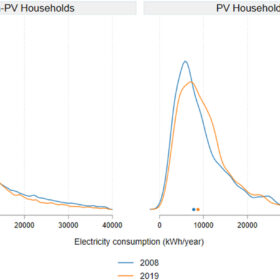
New research confirms residential PV tends to increase household power consumption
New Swiss research shows PV-powered homes can increase power consumption by up to 11% compared to non-solar households. This rise is linked to electric vehicle adoption or other high-usage appliances, which the study’s author notes is not inherently negative or wasteful.
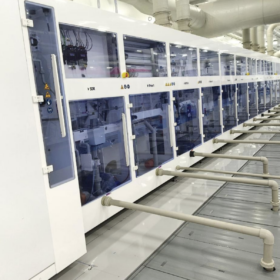
Premier Energies commissions 1.2 GW TOPCon solar cell line in India
Premier Energies has commissioned a 1.2 GW tunnel oxide passivated contact (TOPCon) solar cell line at Fab City in Hyderabad, India, increasing its total cell manufacturing capacity to 3.2 GW.

Suntex integrates organic PV into sturdy textiles for outdoor use
A European team from industry and academia is integrating organic solar cells into woven polyester textiles for outdoor use, such as in tents or canopies. The Suntex project also focuses on improving the durability and efficiency of organic photovoltaics.
